
Driveways Coventry, installed by groundwork specialists, not generalists
Block paving, resin, tarmac and more. Published guide prices and straight advice on every surface.
DNA Driveways Coventry is the driveway and paving side of DNA Landscapes. We install every type of drive, so we can tell you honestly which one suits your home, your budget and the way you use it, and we build it on a base that lasts.
Coventry driveways
Groundwork first, then the surface you choose
When you’ve decided to replace your driveway, you want a contractor with proper groundwork experience, not a handyman who’ll “have a go” at your drive.
We have years of groundwork experience on domestic and commercial driveways across Coventry. We know how to build a base that takes the repeated weight and movement of vehicles, so whichever finish you choose on top, it can perform at its best.
If you’re weighing up finishes, call us in to talk through your ideas and budget. We’ll give you impartial advice on what will suit you best, with the pros and cons of the other options on your shortlist.
Unlike some driveway companies, we won’t steer you towards one material because it’s all we can do. We install every type of drive. We can even tell you whether your existing drive could be resurfaced in a different material, and what that would mean for its quality and lifespan.
Fully insured
Every job is covered, from the first dig to the final sweep.
Local team
Based in Coventry, working across the city and nearby Warwickshire.
Quality materials
Trusted materials from trusted suppliers, above and below the ground.
Driveway design
Your layout is planned and drawn up before any work starts.

DNA Driveways is a Tobermore Registered Contractor, one of a small number of approved installers in the Coventry area certified to lay their premium block paving ranges.
Your local driveway specialists
Honest advice on every type of drive
Driveways look simple until you realise that what’s underneath matters just as much as what’s on top. We regularly see drives that were laid on a poor base, by a homeowner or a cheaper contractor, sinking after the first heavy rain and costing far more to put right than they saved.
We’re DNA Driveways Coventry, part of DNA Landscapes. Andy Lyden, who founded the business, has worked in groundwork since 2008, and our team lays drives from Binley Woods to Kenilworth. What sets us apart isn’t just that we can install any type of driveway: it’s that we know which one is right for your situation. We won’t push resin because it costs more, or block paving because it’s easier for us. We’ll tell you straight what works for your budget, your property and how you actually use your drive.
Whether you’re tired of weeds pushing through gravel, fed up with cracks in old tarmac, or just want something that makes the neighbours jealous, we can sort it out.
Designed first
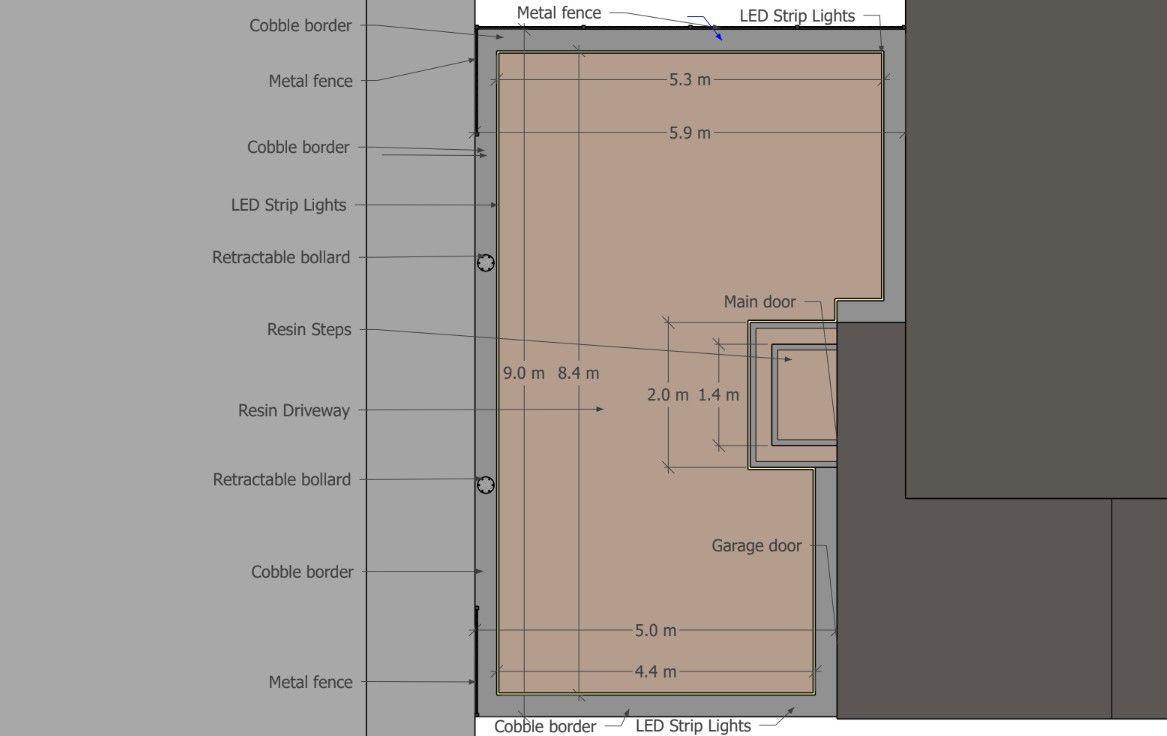
2D driveway designs
Before any work starts, Andy draws up a 2D plan of your new drive: the layout, the materials, the edging and where the water will go. You can see exactly what you’re getting, and try changes on paper, before a single block is laid.
See it finished
A walk round a recent job in Binley Woods
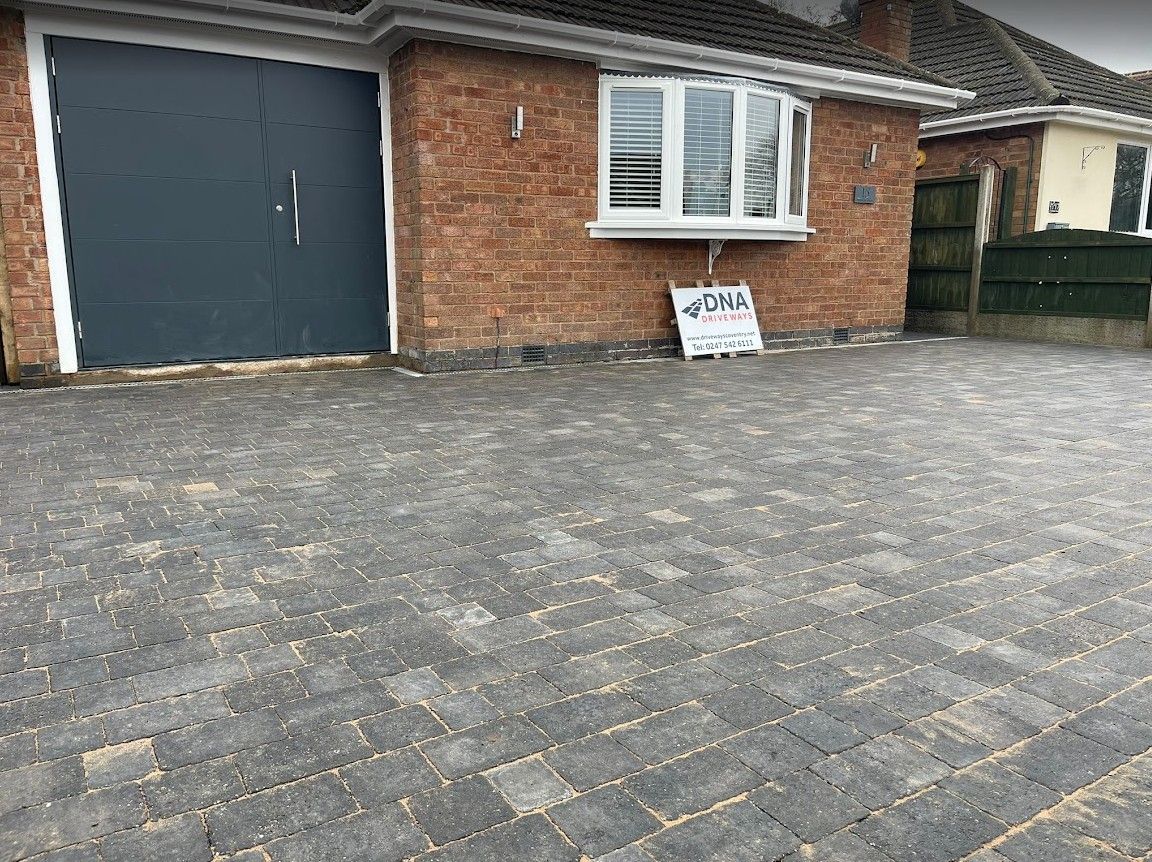
A Bradstone Rumbled block paved drive in charcoal, mixed sizes, with a matching side path and a Kandala Grey sandstone patio at the back. See more of this job in our gallery.
Looking for a new driveway in Coventry? Talk to us today.
Our services
Driveway and paving services in Coventry
-
Resin driveways
Resin bound is a popular choice: smooth, permeable and low maintenance.
-
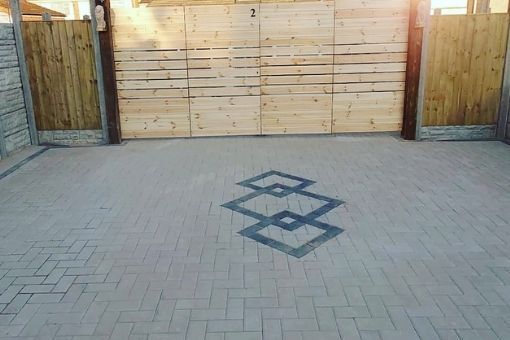
Block paving
Versatile and hard-wearing, with endless patterns, colours and borders.
-
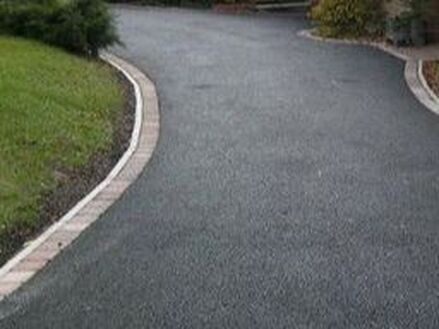
Tarmac driveways
A clean finish that can be resurfaced in years to come.
-
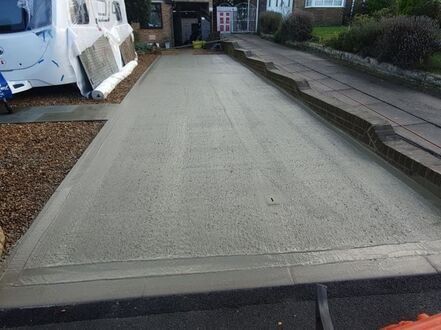
Concrete driveways
Ideal for heavily used drives and heavy vehicles.
-
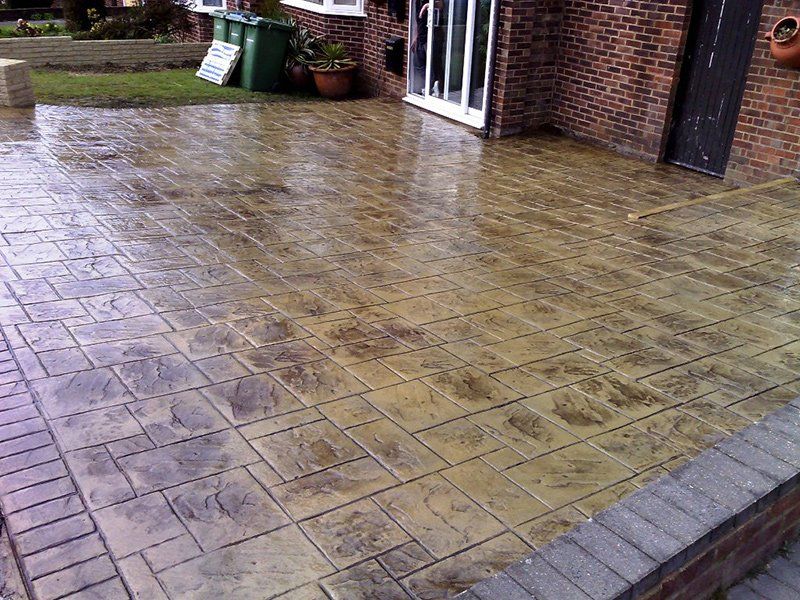
Imprinted concrete
Patterned concrete gives a striking, low-maintenance drive.
-
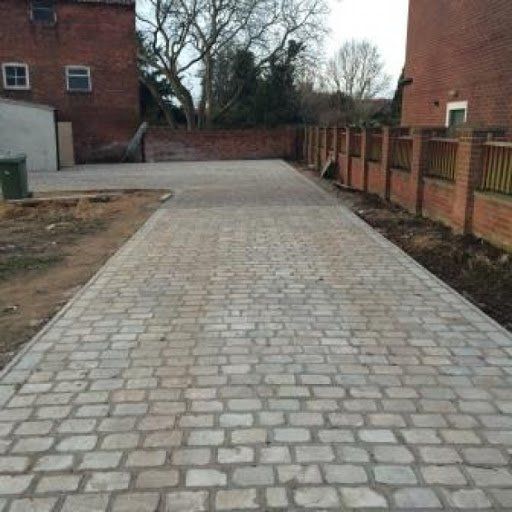
Cobbled driveways
Still sought after for period homes, and for modern ones too.
-
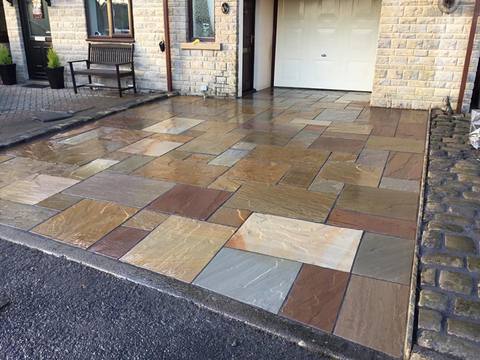
Indian stone driveways
Natural stone with real character, laid to take a car.
-
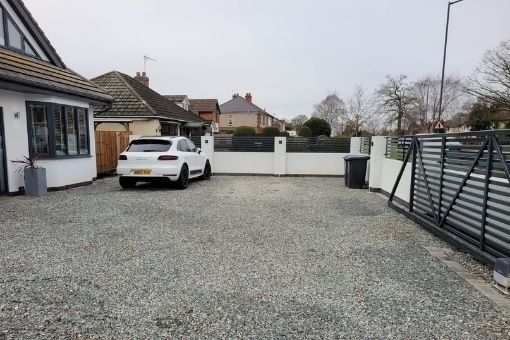
Gravel driveways
An affordable, permeable drive, best laid with stabiliser grids.
-
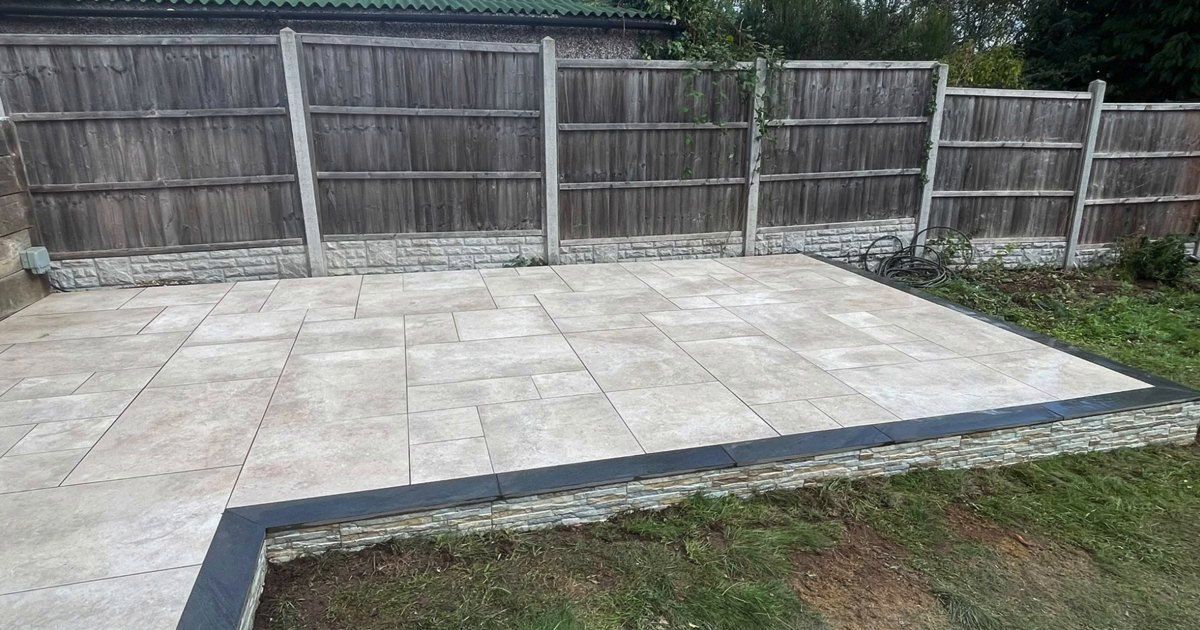
Patios
Yes, we lay patios too, on the same solid groundwork.
We also clean and seal driveways and patios. See all our services.
Reviews
What our customers say
Rated 5.0 on Google. Read our Google reviews
- ★★★★★
Would highly recommend. Good comms and engagement throughout the process and staff worked like troopers from early to late to get the job done. Got two different projects completed and would definitely engage again in the future.
Dan Pearson Google review
- ★★★★★
Quick and smooth process from a friendly team, very pleased with the work I would highly recommend!
Ellie Anderson Google review
- ★★★★★
We recently had work completed at the front of our property by DNA Driveways and are really happy with the outcome. The whole process was smooth from start to finish, with great communication and clear advice from Andy on the best layout and materials to use.
The team were punctual, hardworking, and left everything clean and tidy each day. The finished result has completely improved the look of our home and feels built to a very high standard.
Would happily recommend DNA Driveways to anyone in Coventry or Warwickshire looking for a professional and reliable company.
Keith Shale Google review
- ★★★★★
Really pleased with our block paving driveway done by DNA Driveways. Andy was helpful from the start and talked us through the different options without any pressure.
The team turned up when they said they would, worked hard, and kept everything tidy while the work was being done. The driveway looks great and has made a big difference to the front of the house.
Overall a smooth experience and a good quality finish. Would definitely recommend them if you’re thinking about having your driveway done.
Carol Smolin Google review
Why choose us
Why choose DNA Driveways Coventry?
As part of a landscaping business, we understand what’s happening beneath the surface of a driveway. When we survey your property, we look at soil type, drainage and existing slopes: everything that decides whether your drive still looks good in ten years or starts sinking after the first winter.
What we don’t do is push you towards one material because it’s all we know how to install. We work with every driveway type:
- Resin bound and resin bonded
- Block paving, in all patterns and designs
- Tarmac
- Concrete and imprinted concrete
- Indian stone
- Traditional cobbles
- Gravel
So when we recommend something, it’s based on what suits your property, budget and how you’ll use the drive, not what’s easiest for us to fit.
We’ll also tell you honestly if your existing drive can be resurfaced rather than replaced. Sometimes you can save thousands by resurfacing tarmac or re-sanding block paving, and we won’t say otherwise to make a bigger sale.
Our consultation is free and there’s no pressure. We come out, have a proper look, talk through your options and give you a quote. If you want to think it over or get other prices, that’s fine. We’re local, properly insured and established, and we’ll still be here when you’re ready.
The DNA Driveways approach
Designed, built and made to last
Designed around your home
Your drive should feel like part of your home, not just somewhere to park. Every project starts with how you want the space to look, work and welcome you home, and the layout, materials and finish follow from that.
Clear advice before you begin
We help you understand which materials suit your property, what layout works best for the space, and what level of investment to expect, so you can decide with confidence.
Built properly beneath the surface
Proper sub-base materials, correct drainage and approved installation methods give long-term strength and stability. That’s what prevents sinking, movement and early failure.
Materials that last
Every material, above and below the ground, comes from trusted suppliers and is chosen to look good and perform well for years.
An experienced team
From preparation and drainage to the finishing details, every stage is carried out with care, precision and attention to detail.
Adds to your home
A well-designed drive transforms the first impression of your property, improves kerb appeal and adds long-term value.
Pricing
How much does a new driveway cost in Coventry?
A new driveway in Coventry starts from £120 per m², depending on the material and the size of your drive. These are our current guide prices, supplied and laid:
- Concrete
- £120 per m². Durable and low cost for heavy use
- Tarmac
- £180 per m² new, or £120 to resurface
- Block paving
- £180 per m². Mid-range, with design flexibility
- Imprinted concrete
- £250 per m². Decorative, minimal upkeep
- Resin bound
- £300 per m² on a drive of around 40m²
- Indian stone, cobbles, gravel
- At survey priced once we know the stone, area and base
For an average Coventry drive of around 50m², that’s roughly £6,000 in plain concrete up to about £15,000 in resin bound. The final price depends on the groundwork needed, drainage, and extras such as edging or a dropped kerb.
From survey to finish
Driveway installation across Coventry
We cover the whole job, from the first survey to the finished surface, across Coventry and nearby towns including Kenilworth, Binley Woods and Balsall Common.
Groundwork and preparation
The foundation decides how well your drive performs over time. Before any surface goes down, we assess drainage, soil conditions and the gradient needed to stop water pooling. Our groundwork process covers:
- Site survey: measuring the area, checking for underground services and spotting drainage problems
- Excavation: removing the old surface and digging to the depth needed, typically 200–300mm
- Sub-base: Type 1 MOT aggregate laid and compacted in layers
- Edge restraints: kerbs or edging courses to stop movement
- Drainage: soakaways, channel drains or permeable options where needed
This preparation takes up roughly 60–70% of the time on a job, but it’s what separates a drive that lasts 20 years or more from one that needs repairs within five.
Surface options
Once the base is right, we can lay whichever finish suits you. Each has its own cost, upkeep and look.
- Resin gives a smooth, modern finish. The resin bound method mixes the stone with resin before it goes down, creating a permeable surface that drains through.
- Block paving offers colours, patterns and laying styles to suit any home. Standard blocks suit normal vehicle use, and commercial-grade blocks take heavier loads.
- Tarmac is a practical choice for straightforward drives and resurfacing. A modern wearing course resists weathering better than older surfaces.
Weather
Weather and driveway installation in Coventry
Weather plays a bigger part in driveway work than most people realise. We can’t control the rain, but we can plan around it and choose materials that suit our climate.
| Surface | What it needs | Good to know |
|---|---|---|
| Tarmac | Above 5°C for proper compaction, and no rain while it’s laid | Best laid April to October; cold slows curing and affects the finish |
| Resin bound | Dry conditions and above 10°C; 15°C or more is ideal | Moisture affects curing and bond strength, so never on a damp base |
| Block paving | The most weather-flexible; can be laid in light rain once the base is in | Frost affects the jointing sand, not the blocks; winter work is possible |
| Concrete and imprinted | Dry for 24–48 hours after pouring; 10–25°C is ideal | Too hot dries it too fast and risks cracking; too cold weakens the finish |
Drainage
Drainage planning for Coventry homes
The average Coventry drive is around 40–50m². In heavy rain that’s a lot of water that has to go somewhere. Poor drainage leads to puddles, waterlogging elsewhere on the property, or worse, water against your foundations. On the survey we check:
- The natural gradient and slope of the land
- Existing drainage and its capacity
- How close the drive is to the house foundations
- Local water table levels
- Whether a permeable or non-permeable surface suits the site
Permeable or non-permeable?
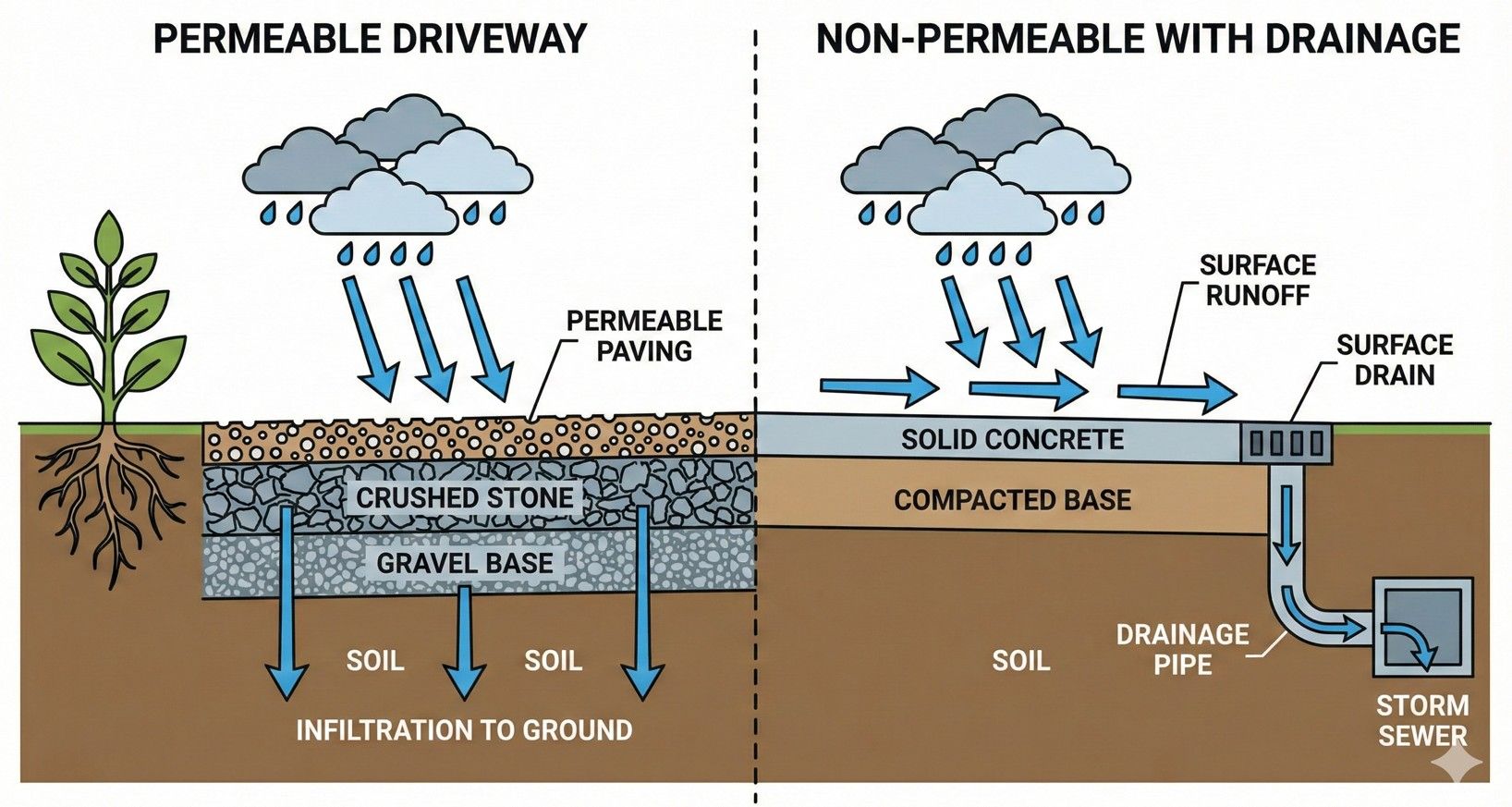
Permeable drives let rain soak through the surface into the ground below. That eases the load on local drains and, in most cases, removes the need for extra soakaways. Resin bound and some block paving with permeable joints fall into this group.
Non-permeable surfaces, such as standard tarmac, concrete and sealed block paving, need a way to deal with run-off: usually channel drains, gullies or soakaways that carry the water away from the house.
Choosing a material
Choosing the right driveway for your property
There’s no single “best” driveway material. What works perfectly for a semi in Allesley might be wrong for a period home in Kenilworth. The right choice depends on a few things.
Budget and long-term value
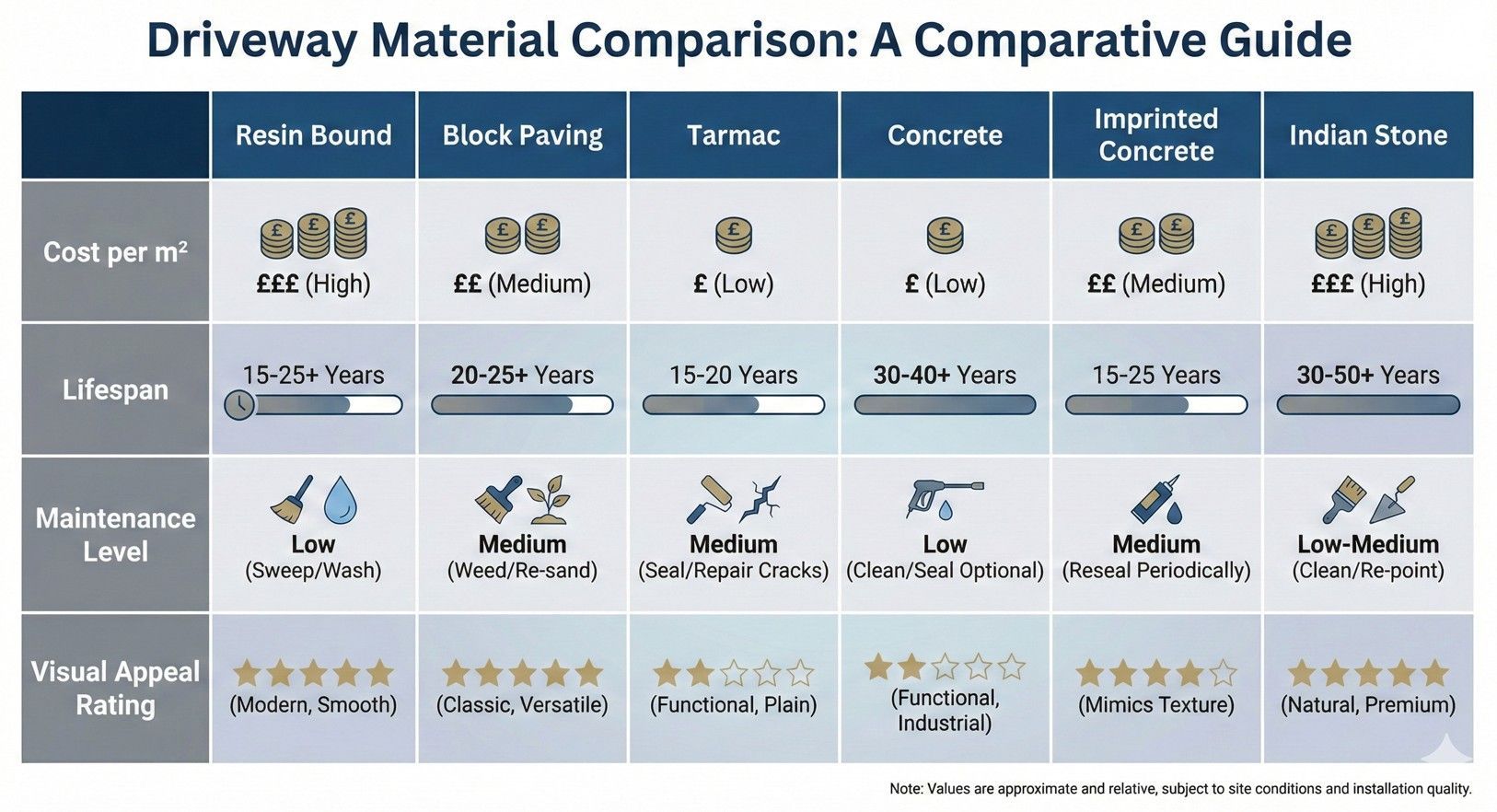
Budget naturally shapes the choice, but look beyond the price of installation. A tarmac drive typically lasts 15 to 20 years before it needs resurfacing, while a well-laid resin bound drive can last 15 to 25 years or more with very little upkeep. Add in cleaning, sealing and repairs over the years, and the picture can change. We give you honest cost comparisons on the survey, covering both the upfront and lifetime costs.
Vehicles and weight
For a family car and the odd visitor, most materials are fine. If you regularly park a caravan, motorhome or commercial vehicle, or load and unload heavy equipment, you need something tougher. Concrete handles heavy loads better than any other material. Block paving works well with commercial-grade blocks. Resin bound is durable but can be marked by very heavy point loads or tight turning from large vehicles.
Style and kerb appeal
Your drive should suit the character of your home. Victorian and Edwardian houses in areas like Earlsdon often suit traditional materials: block paving, Indian stone, or imprinted concrete with a period pattern. Newer homes often suit resin bound or clean-lined block paving. There are no fixed rules, though: we’ve laid modern resin on period properties and traditional cobbles on new builds.
Maintenance
Some people want a drive they can ignore; others don’t mind a little upkeep.
- Low maintenance: resin bound resists weeds and needs little cleaning; imprinted concrete needs resealing now and then; sealed tarmac stays clean with an occasional jet wash
- Moderate maintenance: block paving benefits from yearly weed treatment and re-sanding every few years; Indian stone needs sealing against stains; plain concrete needs the odd crack filled
We explain the real upkeep for each material on the survey, so there are no surprises later.
Not sure which driveway suits your property? We’ll visit, assess the site and talk you through every option.
What to expect
What happens during your driveway installation
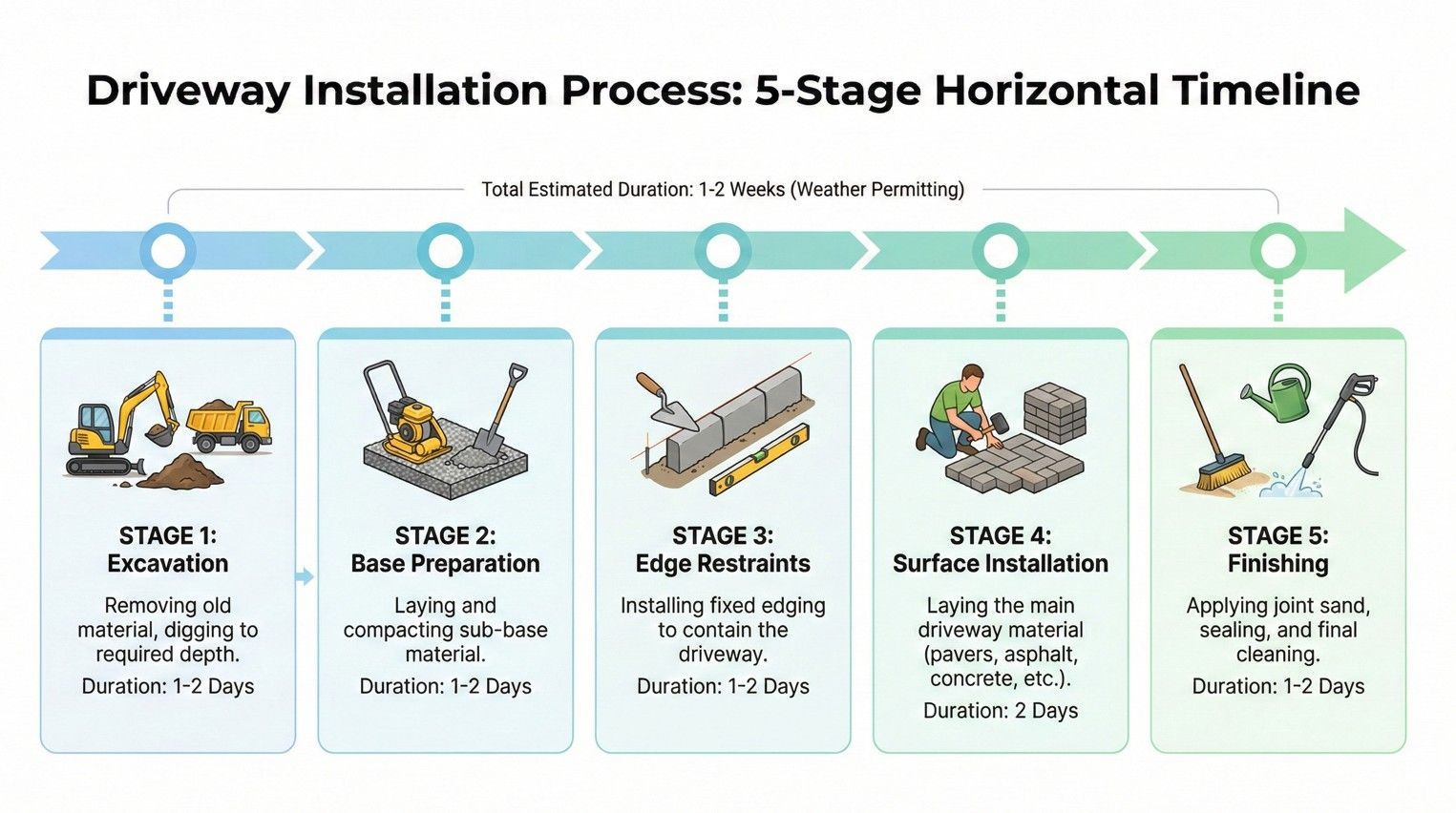
Knowing what happens at each stage helps you plan around the work. Most driveway projects take one to two weeks on site, weather permitting, depending on the size, the material and the ground.
- Excavation, 1–2 days. The old surface comes up and we dig to the depth needed. It’s the noisiest stage. Waste goes away by lorry for proper disposal, so you’re not left with a pile of rubble. We check for water pipes, cables and gas lines, and talk to you before going further if we find poor ground or drainage problems.
- Base, 1–2 days. Type 1 MOT aggregate goes down in layers of about 100mm, each compacted with a plate or roller. Proper compaction here is what stops a drive sinking or dipping later.
- Edging, 1–2 days. Kerbs or edging blocks go in to hold everything together, along with any soakaways or channel drains the drive needs.
- Surface, about 2 days. Block paving is laid by hand, block by block; tarmac arrives hot and is laid and rolled quickly; resin is trowelled smooth in dry weather; concrete is poured, levelled and left to cure; imprinted concrete is stamped while workable.
- Finishing, 1–2 days. Jointing, sealing where specified, and a thorough clean-up. We remove all our equipment and leave the property tidy.
Some surfaces need extra curing time before you can drive on them: concrete and imprinted concrete need 7–10 days, while tarmac can usually take light traffic after 24 hours.
Access and disruption
You won’t be able to park on the drive while we work, so most customers use the street or a neighbour’s drive; we’ll talk this through when we plan the job. We work 8am to 5pm on weekdays, with Saturday mornings if needed to finish, and never on Sundays. We keep a path to your front door wherever we can, and give you notice if you’ll need to use a side or back entrance for a while.
Site protection and safety
Barriers and signs protect the work while materials cure. Keep children and pets away from the site: fresh concrete, wet resin and hot tarmac are all hazards. Where your drive meets a neighbour’s property, we protect their boundary and keep them informed about noise or access.
Resin driveways
Resin driveways in Coventry
Resin drives have become far more popular across Coventry over the past decade. The smooth, contemporary finish appeals to people who want a modern look, and the practical benefits suit busy family homes.
Resin bound or resin bonded?
The two names get mixed up, but they’re different systems. Resin bound mixes the stone with resin before it’s trowelled onto the base, giving a smooth, permeable surface that water drains through. It’s the premium option and what we recommend for driveways. Resin bonded spreads resin over the base and scatters loose stone on top. It’s textured, not fully permeable, and stones can work loose over time, so we generally keep it for decorative areas.
-
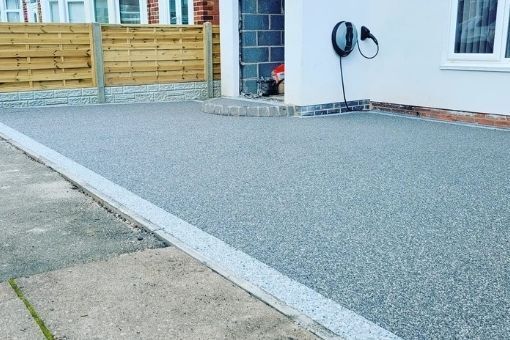
Grey resin driveway with light grey resin edging -
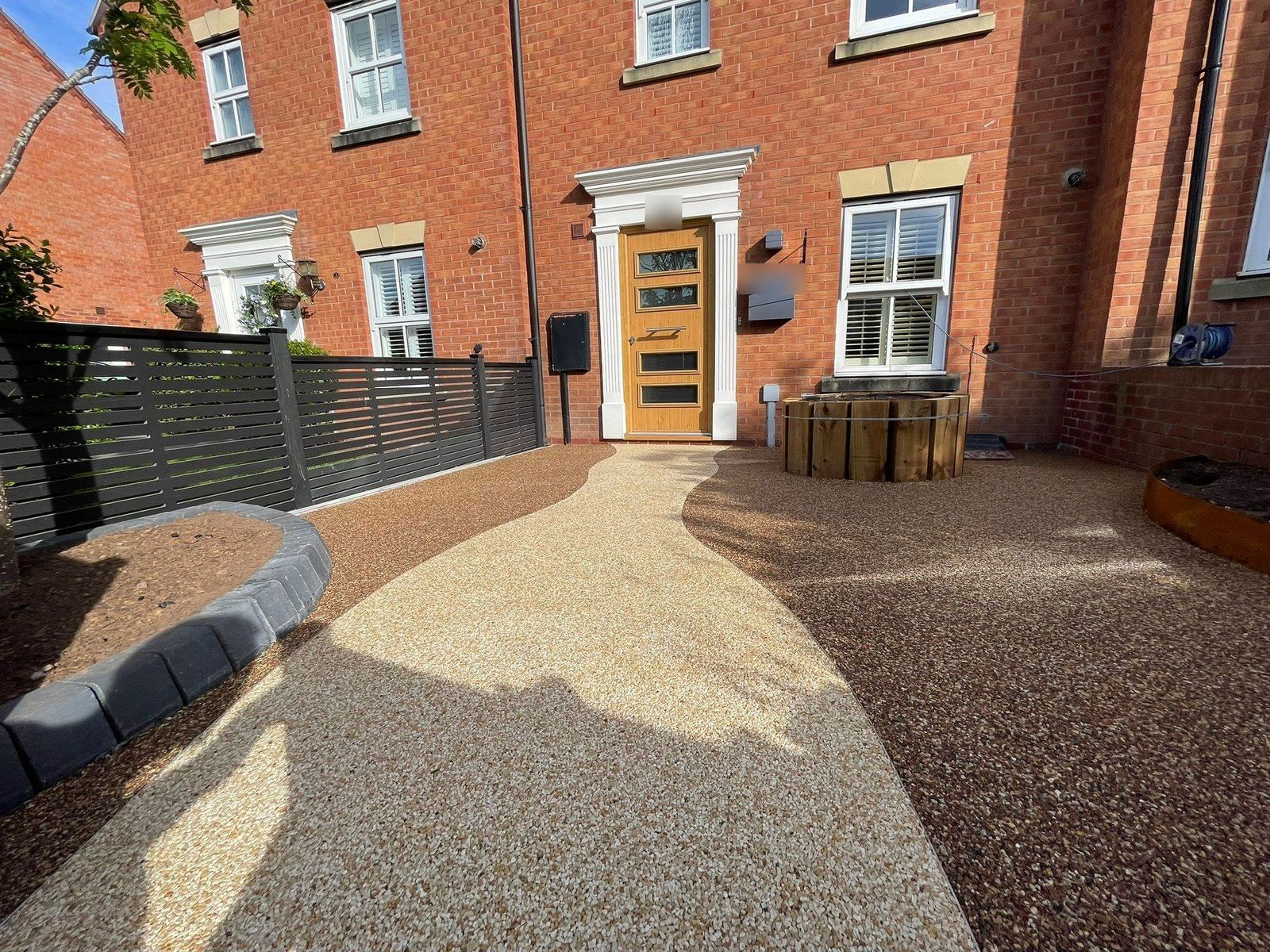
A two-tone resin path we laid in Warwick
Why resin bound?
Low maintenance is the big advantage. There are no gaps for seeds to settle in, so weeds struggle, and moss and algae take hold less easily than on block paving or concrete. The permeable surface drains rain straight into the ground, and there’s a wide choice of natural stone blends, or recycled glass for something different.
Things to consider
Resin needs dry weather above 10°C for the whole cure, which makes autumn and winter work harder in our climate. It costs more upfront, around £300 per m², but a lifespan of 15 to 25 years or more with little upkeep balances that for many people. Tight turning by large vehicles can wear the surface, so if you regularly manoeuvre a big van or motorhome, we’ll talk about whether resin is the right choice. More on our resin driveways page.
Block paving
Block paving driveways
Block paving remains one of the most popular choices across Coventry. Durability, design flexibility and a sensible price make it suit a wide range of homes and budgets.
Patterns and designs
Block paving offers more design options than any other driveway material. Standard blocks can be laid as:
- Herringbone: the strongest pattern for drives, spreading the weight well
- Stretcher bond: running lines, like a brick wall
- Basketweave: pairs of blocks in a woven look
- Random: mixed sizes for an irregular, natural finish
Contrasting colours can form borders, circles, even a house number. We’ve laid everything from simple two-tone drives to complex geometric designs. See our block paving page for more.
-
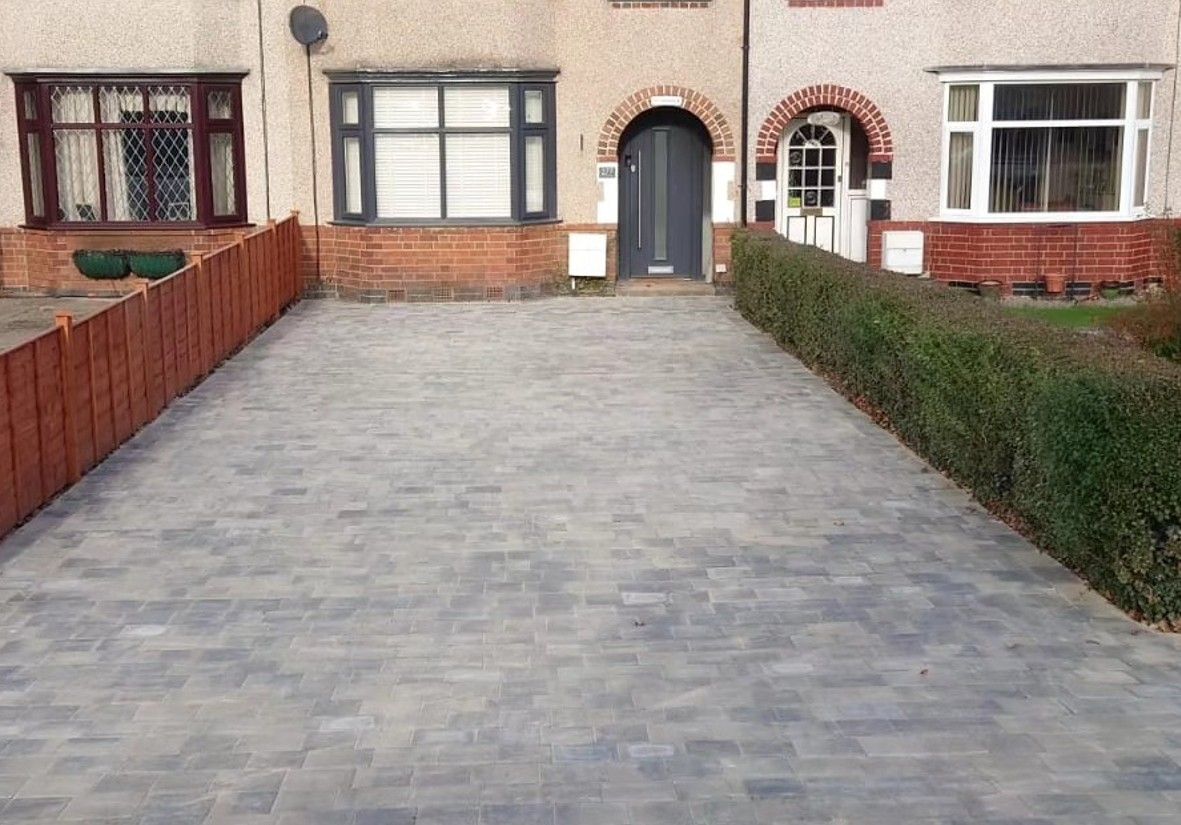
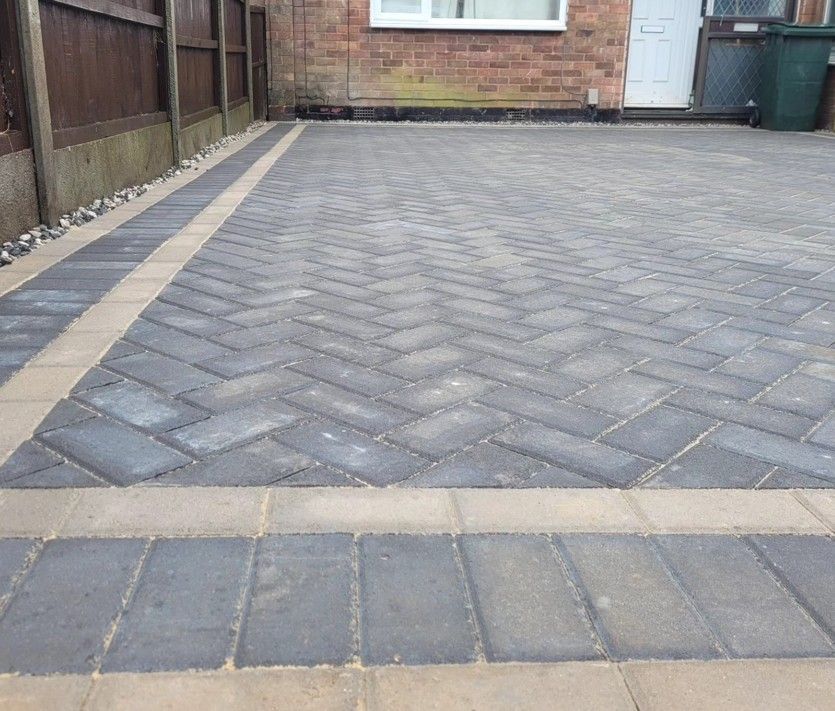
Charcoal block paving driveway -
Herringbone pattern with a contrasting border
Tarmac
Tarmac driveways
Tarmac has been a staple driveway material in the UK for decades, and well-laid tarmac lasts when it’s looked after.
Modern tarmac
Today’s tarmac drives use better materials and laying methods than older ones. A base (binder) course of around 50mm is topped with a finer wearing course of 25–30mm, giving a durable surface for everyday traffic. It’s quick to lay and, at £180 per m², one of the more affordable options.
-
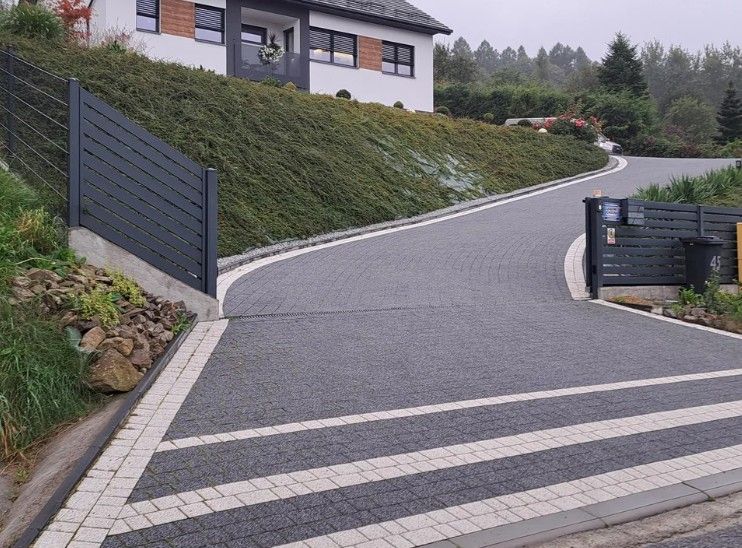
Tarmac with block paving edging -
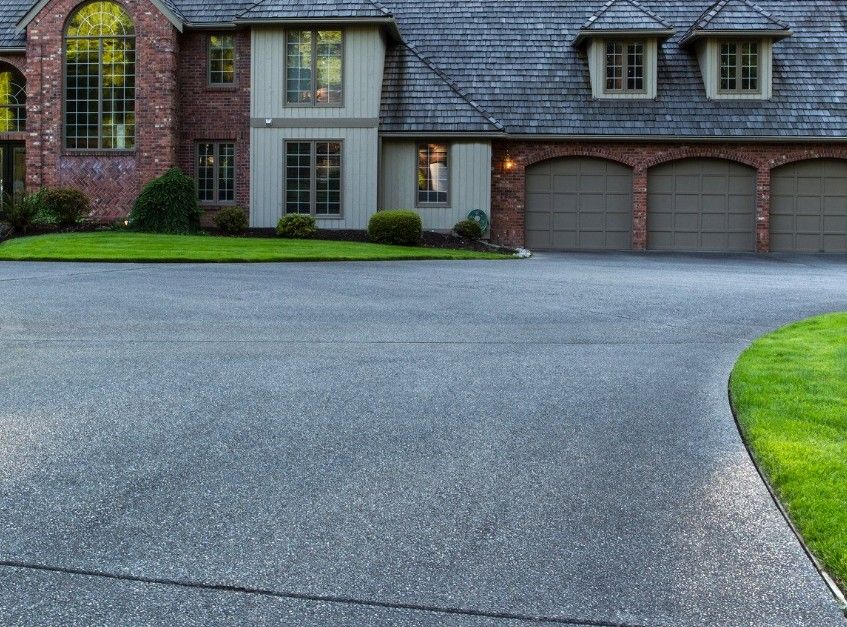
A large black tarmac drive
Resurfacing
One of tarmac’s biggest benefits is that a tired drive can often be resurfaced rather than replaced. If the base is sound, a new wearing course goes over the top, from £120 per m², usually in a day or two. If the base has failed or drainage is poor, full replacement is the better long-term answer, and we’ll tell you which on the survey.
Looking after tarmac
Tarmac weathers as small stones gradually loosen, faster if it’s never sealed. A sealer every 3–5 years protects it from UV and water and brings back the deep black. Oil and fuel break down the binder, so a drip tray helps if your car leaks, and small holes are worth filling early before they grow. See our tarmac driveways page.
Concrete
Concrete driveways
Concrete suits homes where heavy use and durability matter more than looks. If you need a hard-working surface that takes real weight, concrete delivers.
When concrete makes sense
- Parking or manoeuvring heavy vehicles: motorhomes, vans, lorries
- Loading and unloading heavy equipment
- Commercial premises with frequent deliveries
- Tight budgets where durability still comes first
Laying concrete
Concrete needs expansion joints, typically every 3–4 metres in each direction, so it can move with the temperature without cracking. It needs 7–10 days to cure before taking a car, protected from rain and frost. A brushed finish grips better than smooth concrete in the wet, and colour can be added to the mix.
Lifespan and upkeep
Well-laid concrete can last 30 years or more. Upkeep is mainly cleaning and a sealer every few years. Small cracks are easy to fill; oil stains show more than on darker surfaces, which sealing helps with. See our concrete driveways page.
Imprinted concrete
Imprinted concrete driveways
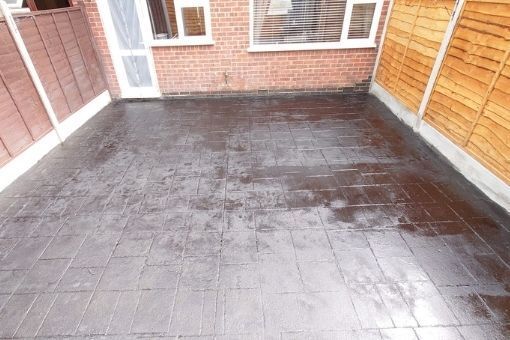
Imprinted concrete, also called pattern imprinted or stamped concrete, combines concrete’s strength with a decorative finish. It suits people who want low upkeep but not the look of plain concrete.
How it works
The concrete is poured as normal, then patterns are stamped in while it’s workable. Colour hardeners and release agents create anything from cobble to slate to brick effects. It looks like paving or stone, without the joints where weeds grow.
Patterns and colours
- Ashlar slate: large rectangular slabs with a stone texture
- European fan: a semi-circular cobble pattern
- Random stone: an irregular, natural stone look
- Herringbone brick: the classic brick paving pattern
Colours can be mixed for borders, bands and multi-tone effects, and the colour is sealed in rather than painted on.
Upkeep
Reseal every 3–5 years to keep the protection and colour depth: a thorough clean, then a fresh coat of sealer. In between, an occasional jet wash is all it needs, with no weeding or re-sanding. See our imprinted concrete page.
Indian stone
Indian stone driveways
Indian stone has grown hugely in popularity for drives. Natural stone has a character manufactured materials can’t quite match, and calibrated stone makes laying it more consistent.
Thickness matters
Patio-grade slabs are typically 20–22mm thick; driveway-grade stone is 30–40mm. Thinner slabs are more likely to crack under a car, even on a good base, so we only use driveway-grade stone where vehicles go.
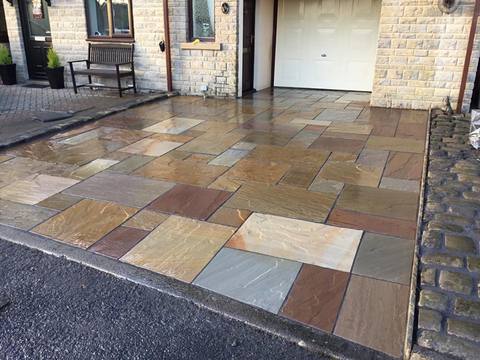
Popular stones
- Kandla Grey: even grey tones for contemporary homes
- Raj Green: greens, browns and greys with natural variation
- Autumn Brown: warm browns and rust tones
- Black Limestone: dark and dramatic, especially when wet
- Mint Sandstone: pale greens and creams
Laying and looking after it
Natural stone varies in thickness even when calibrated, so every slab needs individual attention to get consistent levels, and there’s more cutting than with manufactured paving. Tight joints of 10–15mm look contemporary; wider joints of 15–25mm show off each stone. Stone absorbs oil, tyre marks and leaf stains more readily, so we recommend a penetrating sealer that protects without a high gloss. Clean it with suitable stone cleaners, never a harsh jet. See our Indian stone driveways page.
Cobbles
Cobbled driveways
Traditional cobbled drives suit period properties and conservation areas, where keeping historic character matters. They can work on modern homes too, if you want something distinctive.
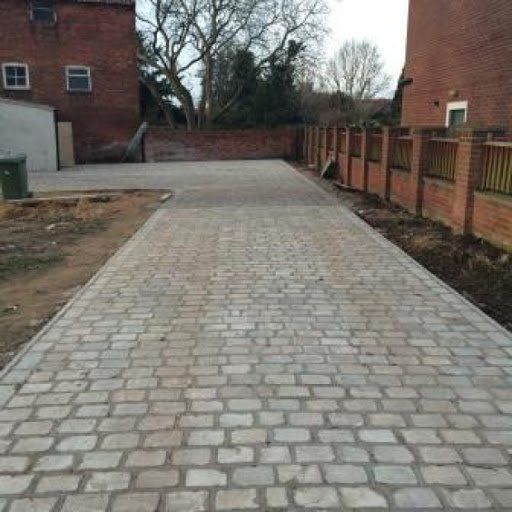
Types of cobble
- Natural stone: granite, sandstone or limestone, with an authentic look at a premium price
- Reclaimed: salvaged from old streets and yards, full of character but not always available in quantity
- Reproduction: consistent sizes and supply, at a lower cost
- Setts: larger, flatter and more regular, typically 100×100mm, and easier to drive on
Cobbles can go on a sand bed, the traditional way, or be bedded in mortar, which is more stable under cars and what we normally use for drives. The surface is uneven by nature, which is part of the charm but worth knowing if you have a low sports car or mobility needs. Upkeep is light: occasional cleaning and weed treatment in the joints, and a little more effort clearing snow and leaves. See our cobbled driveways page.
Patios
Patios in Coventry
Many people carry the driveway material through to the back garden, for a matching look and the same upkeep. We lay patios on the same groundwork principles that make our drives last.
-
A raised porcelain patio in Earlsdon -
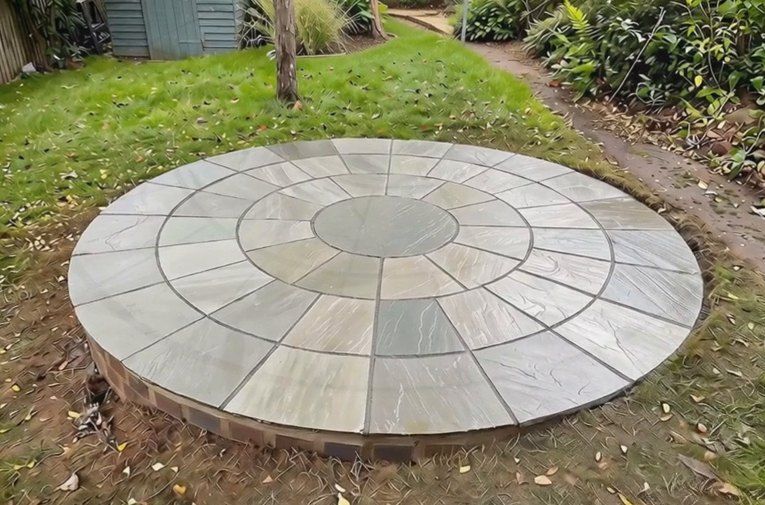
A circular sandstone patio in Kenilworth -
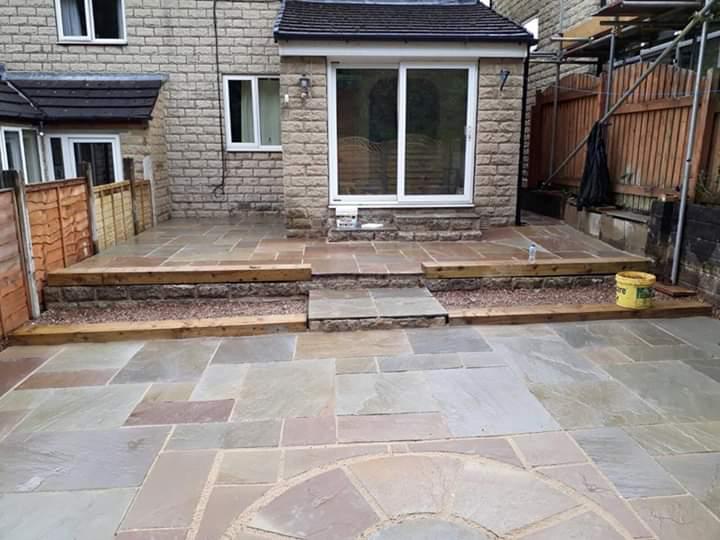
Three levels: Indian stone and gravel
Patio designs
Recent jobs include a raised porcelain patio in Earlsdon, built up on clad walls with anthracite copings, and a free-standing sandstone circle in a Kenilworth lawn. We can create:
- Single-level patios for simple layouts
- Multi-level patios with steps for sloping gardens
- Raised patios with retaining walls
- Sunken seating areas
- Circles and curved features
- Built-in planters and borders
Patios don’t carry cars, so they can use patio-grade stone and a lighter base, but drainage matters just as much: we lay them to shed water away from the house, with the surface at least 150mm below the damp-proof course. Doing the drive and patio together saves on materials and time on site, and matching materials tie the front and back together. See our patios page.
Cleaning and sealing
Driveway cleaning and sealing
We clean and seal all types of driveway, whether we laid them or not. Regular care extends the life of a drive and keeps it looking smart.
Block paving, imprinted concrete and natural stone gain most from sealing, which protects against stains, slows weeds and makes cleaning easier. A professional clean shifts ingrained dirt, oil and growth that a hose won’t, using the right equipment and cleaners for each surface. See driveway cleaning and driveway sealing.
Planning and regulations
Planning permission for Coventry driveways
Most driveway work doesn’t need planning permission, but the rules on drainage affect what you can lay.
The 5m² rule
Since 2008, a new or replacement front drive of more than 5m² needs planning permission unless it is permeable or drains to a lawn, border or soakaway rather than the road. That leaves three routes:
- A permeable surface: resin bound, permeable block paving on the right sub-base, or grass-reinforcement systems
- Drainage: channel drains, gullies or soakaways to collect water from a solid surface
- Drain to a lawn or border: a drive that falls towards ground that can absorb the run-off
We design your drive to meet the rules, so no separate planning application is needed.
Dropped kerbs
If your drive crosses the pavement, you need a dropped kerb, and you can’t legally drive over a kerb that hasn’t been lowered. The application has to come from you as the owner, but we’ll advise.
- In Coventry: apply to Coventry City Council. The standard crossing is 2.7m wide. If the council’s own team builds it, the highways fee is £130, the construction is quoted separately, and the council aims to start within six weeks once everything is in place. On a classified road, you need a full planning application first. Coventry City Council guidance.
- In Warwickshire(Kenilworth, Binley Woods, Rugby, Nuneaton, Bedworth and nearby): Warwickshire County Council is the highway authority. You need its permission first, and the kerb is then lowered by an accredited contractor.
We can lay your drive while the application is going through, but you can’t drive across the pavement until the kerb has been dropped.
Conservation areas and listed buildings
In a conservation area, extra restrictions can apply to front gardens and drives; they vary by area, so check with the council’s planning department first. Listed buildings have stricter controls, and permission is usually needed for any external change, including a drive.
Aftercare
Aftercare advice
When we finish, we give you maintenance advice for your surface: how to clean it, when to seal it, and what to look out for as it settles into use.
Most drives settle very slightly in the first few months as the materials bed in under use. That’s normal. If anything concerns you, get in touch and we’ll come and take a look.
Questions
Driveway questions
Why choose DNA Driveways Coventry?
We have years of groundwork experience, so the base under your drive is built properly. We offer a full survey and consultation to find the best option for your budget, we know every driveway type and material, and we give open, honest advice. We take away and dispose of all waste responsibly and leave your property tidy. As part of DNA Landscapes, we can also take on the rest of the front garden, so you deal with one team.
How much does a new driveway cost in Coventry?
Our guide prices start at £120 per m² for concrete. Tarmac and block paving are £180 per m², imprinted concrete £250 and resin bound £300. For an average 50m² drive, that’s roughly £6,000 to £15,000. Indian stone, cobbles and gravel are priced at survey. The final price depends on groundwork, drainage and extras such as edging or a dropped kerb.
What’s the best driveway material?
There isn’t a single best material; it depends on your budget, your property and how you use the drive. Resin bound is low maintenance and modern but costs more upfront. Block paving offers design choice and easy repairs at a mid-range price. Tarmac suits straightforward drives and tighter budgets. Concrete handles heavy vehicles best. We recommend what suits you, not one favourite.
Does a new driveway need to be permeable?
Not necessarily. A front drive of more than 5m² must either be permeable or drain to a lawn, border or drainage system rather than the road, otherwise it needs planning permission. Tarmac or concrete is fine with channel drains, gullies or a soakaway. We design the drainage at the planning stage.
How long does it take to install a new driveway?
Most drives take one to two weeks on site, weather permitting: excavation, base, edging, surface and finishing each take a day or two. Some surfaces then need curing time before you can drive on them: 7–10 days for concrete, about 24 hours for tarmac, while block paving can be used straight away.
Which driveways are low maintenance?
Resin bound needs the least: it resists weeds and only needs an occasional clean. Imprinted concrete needs resealing every 3–5 years. Sealed tarmac stays clean with an occasional jet wash. Block paving needs more care, with weed treatment and re-sanding every few years, and natural stone needs sealing against stains.
Do I need planning permission for a new driveway?
Usually not, provided the drainage rules are met. You do need permission from the council for a dropped kerb: Coventry City Council in the city, or Warwickshire County Council in places like Kenilworth and Binley Woods. Conservation areas may have extra restrictions, and listed buildings usually need permission. We advise on all of this at the survey.
Can you resurface my existing driveway instead of replacing it?
Sometimes. Tarmac can often be resurfaced if the base is sound, from £120 per m². Block paving can be lifted, the base repaired and the blocks re-laid. Resin can sometimes go over sound concrete or tarmac. If the base has failed or drainage is poor, replacement is better value in the long run.
How long do driveways last?
Roughly: concrete 30–40 years or more, Indian stone 30–50 years or more, block paving 20–25 years or more, resin bound and imprinted concrete 15–25 years, and tarmac 15–20 years before it needs resurfacing. Every surface lasts longer with the right care: cleaning, sealing and fixing small problems early.
What if I’m worried about my new driveway?
Most drives settle very slightly in the first few months as the materials bed in, which is normal. If anything concerns you, call us and we’ll come and look at it with you.
Can you install a driveway in winter?
It depends on the material. Block paving can be laid most of the year. Tarmac needs dry weather above 5°C, resin bound needs dry weather above 10°C, and concrete needs dry, moderate conditions to cure. We can usually find a suitable window even in winter.
Areas we cover
Driveways across Coventry and the surrounding area
- Coventry
- Earlsdon
- Coundon
- Binley Woods
- Kenilworth
- Balsall Common
- Leamington Spa
- Warwick
- Solihull
- Lapworth
- Rugby
- Dunchurch
- Cawston
- Long Lawford
- Ryton-on-Dunsmore
- Southam
- Long Itchington
- Nuneaton
- Bedworth
- Bulkington
- Galley Common
- Atherstone
- Coleshill
- Hinckley
- Burbage
Our services
- Resin driveways
- Block paving
- Tarmac driveways
- Imprinted concrete
- Concrete driveways
- Cobbled driveways
- Indian stone driveways
- Gravel driveways
- Patios
- Driveway cleaning
- Driveway sealing
- Gallery
To finish off the entrance to your home, why not add a new set of composite driveway gates in Coventry, supplied and fitted by Composite Gates UK.
Ready to transform your driveway?
Free consultations and no-obligation quotes on every driveway project across Coventry and the surrounding area. Whether you know exactly what you want or would like guidance, call us on 0247 542 6111, or send your measurements and a photo through our contact page for an initial assessment.
To finish off your the entrance to your property why not include a new set of composite driveway gates Coventry fully supplied and fitted by Composite Gates UK.