
Driveways Coventry - installed by groundwork specialists, not generalists
Block paving, resin & tarmac - guaranteed installations & professional quotes
⭐ 5.0 Google Reviews · Coventry since 2008
Fully insured
Local Team
Quality materials Used
Driveway design Experts
Coventry Driveways
When you have made the decision to change your driveway you want to ensure you chose a driveway contractors with proper groundwork experience and not a bunch of generalists handymen who will have a go at doing your drive.
DNA Driveways Coventry, have a wealth of knowledge and experience in groundworks over many years, working on both domestic and commercial Coventry driveways. Our knowledge on the importance of setting a solid base for to take the repeated weight and movement of heavy vehicles means that we are in an excellent position to 'top' a driveway with a variety of finishes knowing that whichever one you chose it will perform to the best of its capabilities with the material chosen. So if you're currently debating which type of finish to go for then why not call us in to discuss your thoughts, aspirations and budget and let us provide some impartial knowledge on what may the most suitable outlining and pros and cons to the other options on your shortlist. Unlike many other driveway companies we won't 'drive' you down one particular material option - for example, we don't just do block paving and say it is the best driveway option because that's really all we can do. We install all driveway types, so if you are in Coventry and looking for advice on all driveways options we can be open and honest about what's the best driveway surface for you. At DNA Driveways Coventry we can even tell you whether or not your existing drive would be suitable for resurfacing with a different material and what the implications of that may lead to in terms of the quality and longevity of your driveway.
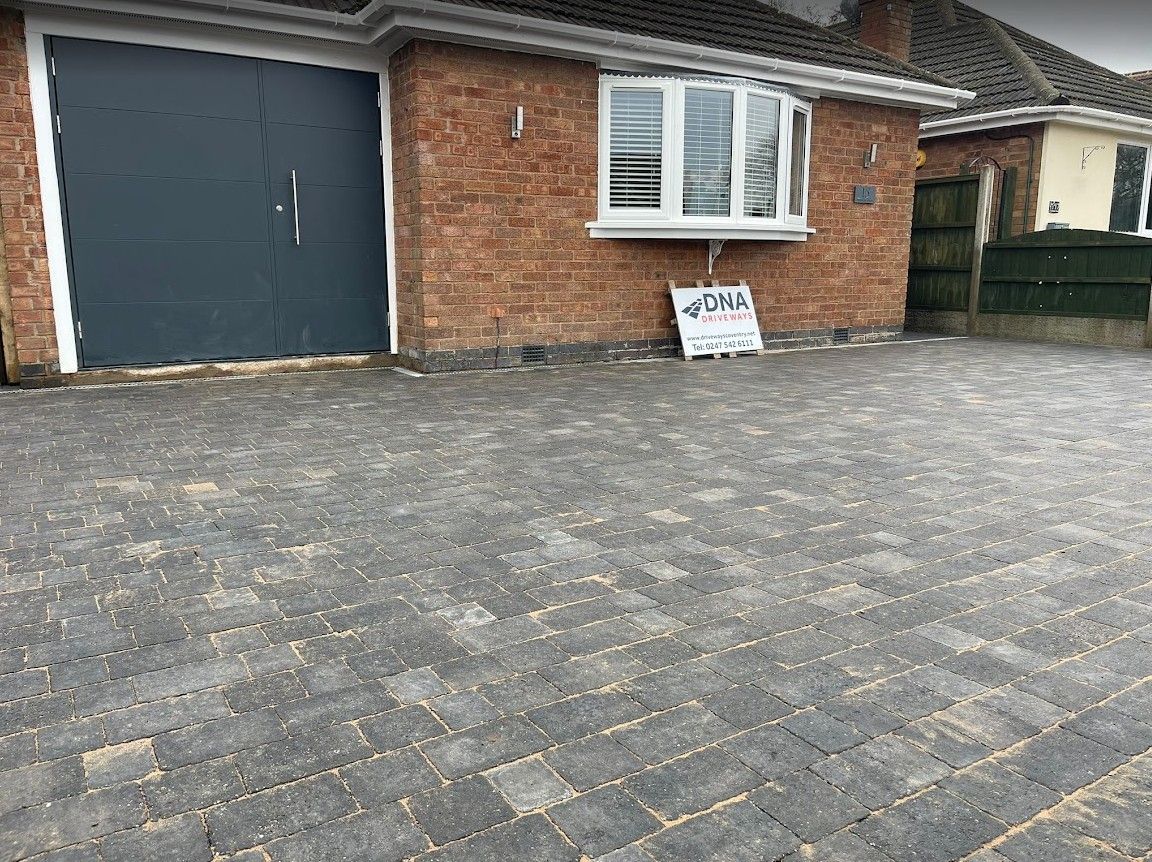

DNA Driveways is a Tobermore Registered Contractor - one of a small number of approved installers in the Coventry area certified to install their premium block paving ranges.
Get in touch with DNA Driveways Coventry today for a FREE Consultation
DNA Driveways Coventry - Your Local Driveway Specialists
Last winter, we got a call from a homeowner in Allesley who'd tried doing their own block paving after watching a few YouTube videos. They'd spent £3,000 on materials and three weekends of back-breaking work, only to watch their new driveway sink in the middle after the first heavy rain. We see this more than you'd think - people trying to save a few quid but ending up spending double to fix it properly. That's the thing about driveways - they look simple until you realise what's underneath matters just as much as what's on top.
We're DNA Driveways Coventry, and we've been installing driveways across Coventry for over 15 years. From Binley Woods to Kenilworth, we've probably worked on a property near you. What sets us apart isn't just that we can install any type of driveway - resin, tarmac, block paving, whatever you fancy - it's that we actually know which one's right for your specific situation. We're not going to push resin on you just because it's more expensive, or suggest block paving because it's easier for us. We'll tell you straight what'll work best for your budget, your property, and how you actually use your drive.
Whether you're tired of weeds pushing through gravel, fed up with cracks in old tarmac, or just want something that'll make the neighbours jealous, we can help sort it out.
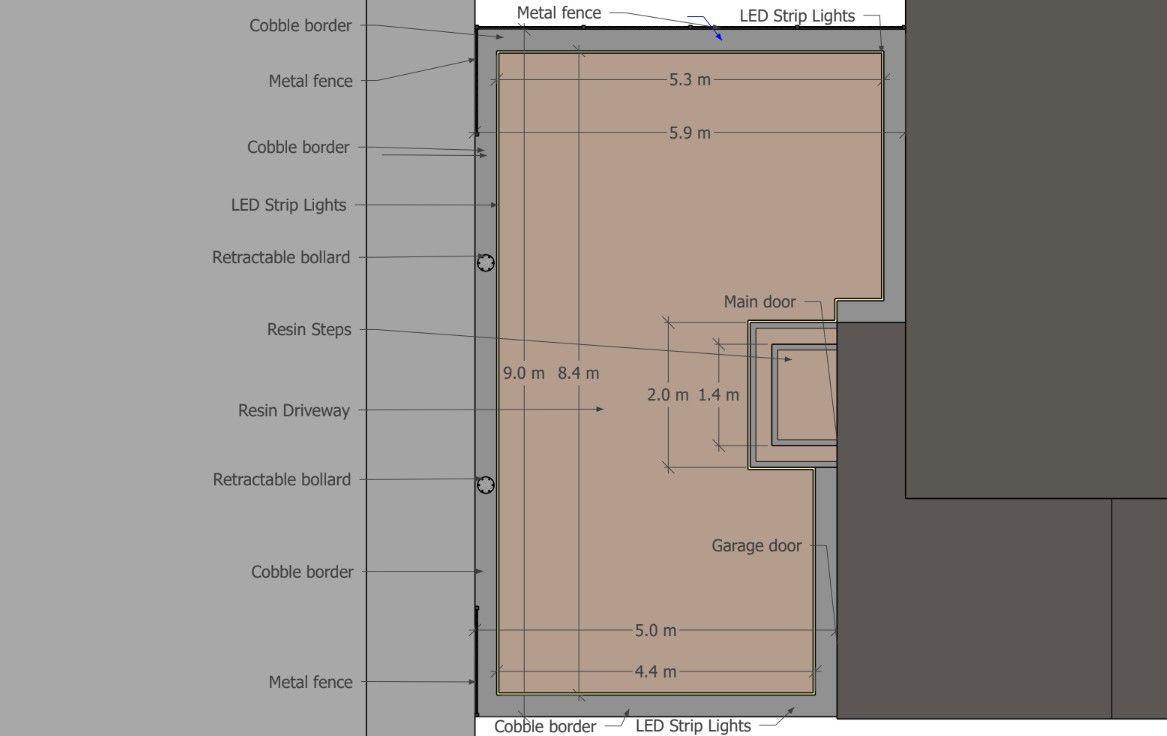
2D New Driveway Design
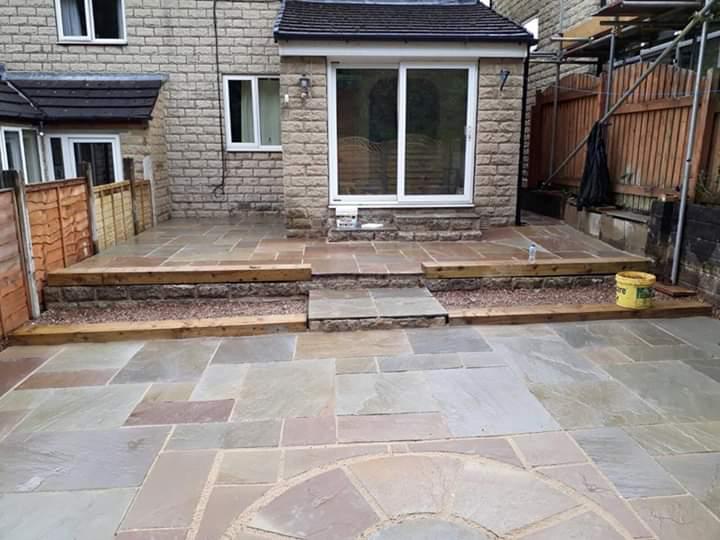
A walk through a recent Bradstone Rumbled block paving (charcoal mixed size) driveway and Kandala Grey sandstone patio installed in Binley Woods.
Driveways near me
If you're looking for new driveways near me in Coventry then please get in touch today
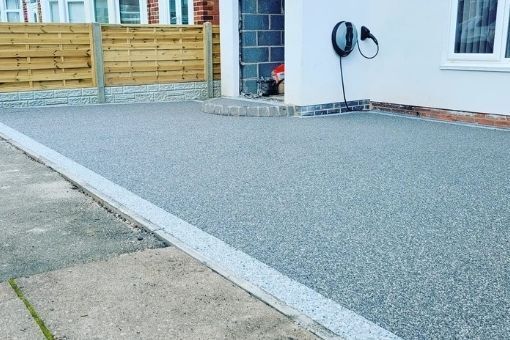
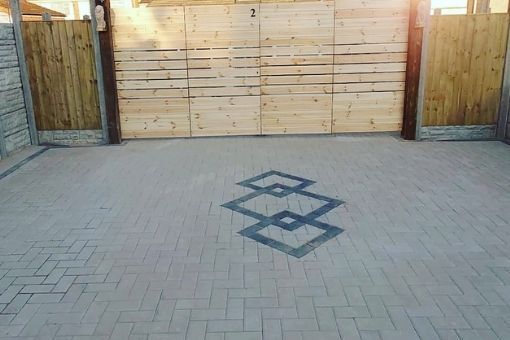
Why Choose DNA Driveways Coventry for Your Driveway Installation?
We've been installing Driveways in Coventry for years and as part of a landscaping business we understand the importance of what's happening beneath the surface of a driveway.
Groundwork experience matters. We've been doing this since 2008, working on both domestic driveways and commercial projects across Coventry. When we survey your property, we're looking at soil type, drainage, existing slopes - all the stuff that determines whether your driveway will still look good in 10 years or start sinking after the first winter.
What we don't do is push you towards one particular material just because that's all we know how to install. We work with all driveway types:
- Resin bound and resin bonded
- Block paving (all patterns and designs)
- Tarmac and asphalt
- Concrete and imprinted concrete
- Indian stone paving
- Traditional cobbles
- Gravel
This means when we recommend something, it's based on what actually suits your property, budget, and how you'll use the drive - not what's easiest for us to fit.
We'll also tell you honestly if your existing driveway can be resurfaced rather than completely replaced. Sometimes you can save thousands by resurfacing tarmac or re-sanding block paving, and we're not going to say otherwise just to make a bigger sale.
Our consultation is free and there's no pressure. We come out, have a proper look, discuss your options, and give you a quote. If you want to think about it or get other prices, that's fine. We're local, properly insured, established, and we'll still be here when you're ready.
The DNA Driveways Approach
Driveways Designed Around Your Home
Your driveway should feel like part of your home — not just somewhere to park the car. At DNA Driveways, every project begins by understanding how you want the space to look, function and welcome you home. We carefully consider layout, materials and finishes to create a driveway that complements your property and enhances the overall feel of your home.
Clear Advice Before You Begin
Choosing the right driveway can feel overwhelming with so many options available. We guide you through the process, helping you understand:
- Which materials will suit your property
- What layout will work best for your space
- What investment level to expect
This ensures you can make confident decisions before work begins and because we can install all types of driveways - we can provide fully impartial advice.
Built Properly Beneath the Surface
A driveway that looks good on day one is easy. A driveway that still looks good years later requires proper groundwork. When we build your driveway we will be using professional sub-base preparation materials, correct drainage and industry-approved installation methods to ensure long-term strength and stability. This is what prevents sinking, movement and premature failure.
High Quality Materials That Last
Your driveway is a long-term investment in your home. We use trusted materials form trusted suppliers. Each material, both above and below the ground, is carefully selected to ensure your driveway looks premium and performs well over time.
Experienced Driveway Specialists
When you choose DNA Driveways, you are working with an experienced team that understands how to design and install driveways correctly. From preparation and drainage through to the finishing details, every stage is carried out with care, precision and attention to detail.
A Driveway That Adds Value to Your Home
A well-designed driveway can transform the first impression of your property. Whether you are arriving home each day or welcoming visitors, your driveway becomes the entrance to your home — improving kerb appeal and adding long-term value. Done properly - a high quality driveway can add an additional 10% to the value of your property.
Designed. Built. Made to Last
At DNA Driveways, we believe a driveway should do more than provide parking. It should feel like the right entrance to your home — beautifully finished, built properly beneath the surface and designed to last.
How Much Does a New Driveway Cost in Coventry?
A new driveway in Coventry typically costs upwards of £150 per square metre, depending on the material you choose and the size of your drive. Here's what you can expect to pay:
Driveway Costs by Material:
- Tarmac/Asphalt: £180 per m² - One of the most affordable options and relatively quick to install
- Concrete: £150 per m² - Durable and low-cost for heavy use
- Block Paving: £180 per m² - Mid-range pricing with design flexibility
- Resin Bound: £300 per m² - Premium option, low maintenance
- Imprinted Concrete: £250 per m² - Decorative finish, minimal upkeep
- Porcelain/ Indian /Sandstone Stone Paving/Por: £280 per m² - Natural stone appearance
For an average Coventry driveway (around 50m²), you're looking at £9,000-£15,000 total. The final price depends on groundwork required, drainage solutions, and any extras like edging or dropped kerbs.
Driveway Installation Services Across Coventry
We cover the full installation process from initial survey through to the finished surface. Our team works across Coventry and surrounding areas including Kenilworth, Binley Woods, Baginton, and Leamington Spa.
Professional Groundwork & Preparation
The foundation determines how well your driveway performs over time. Before any surface material goes down, we assess your property's drainage requirements, soil conditions, and the gradient needed to prevent water pooling.
Our groundwork process includes:
- Site Survey - We measure the area, check for underground services, and identify any drainage issues
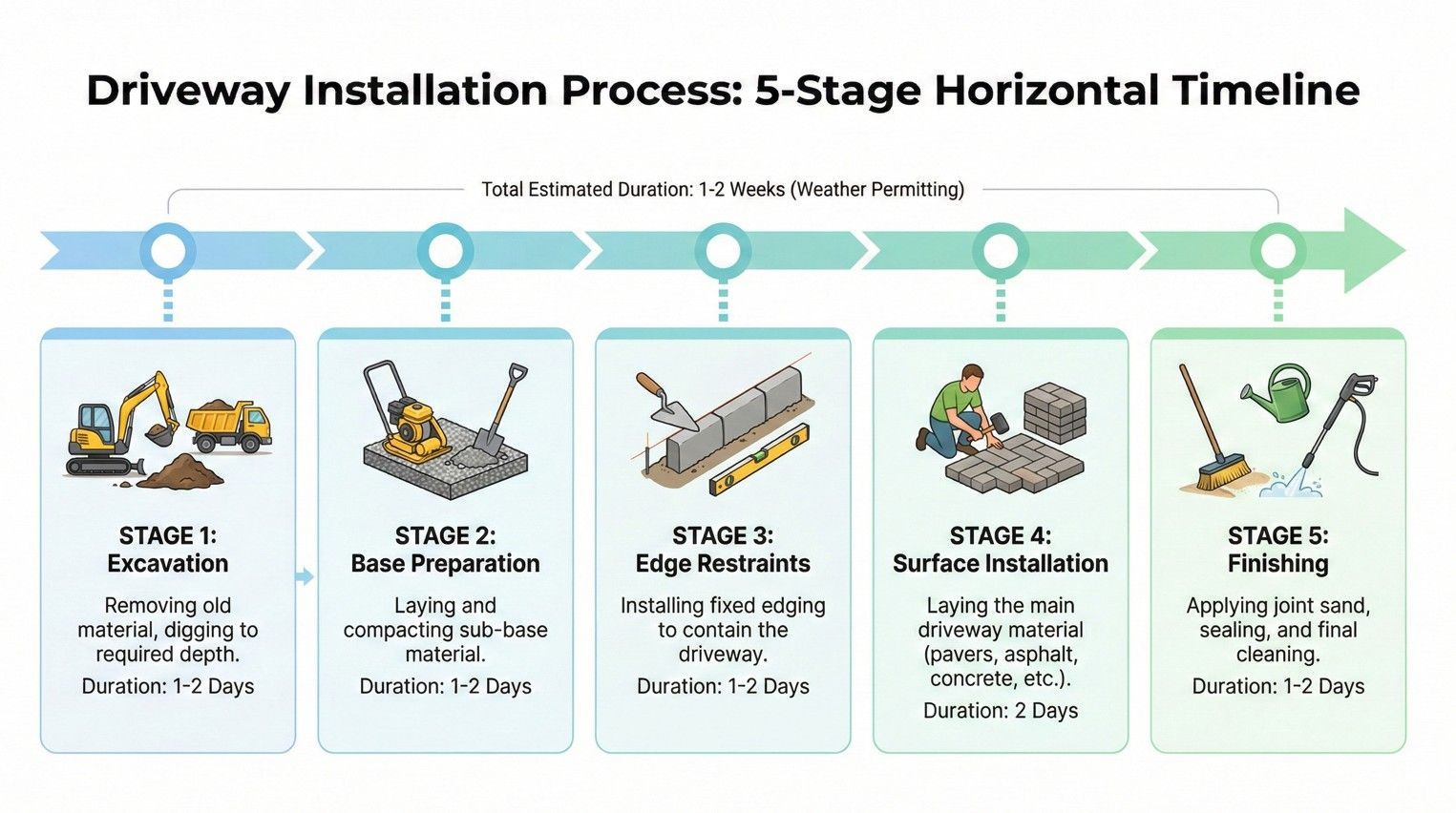
- Excavation - Removing existing surfaces and digging to the required depth (typically 200-300mm)
- Sub-Base Installation - Laying and compacting Type 1 MOT aggregate in layers
- Edge Restraints - Installing kerbs or edge courses to prevent movement
- Drainage Solutions - Adding soakaways, channel drains, or permeable options where needed
This preparation work takes up roughly 60-70% of the project time, but it's what separates a driveway that lasts 20+ years from one that needs repairs within five.
Surface Material Options
Once the base is properly prepared, we can install whichever surface finish suits your requirements. Each material has different characteristics in terms of cost, maintenance, and appearance.
Resin Driveways provide a smooth, modern finish with excellent drainage properties. The resin-bound method we use mixes aggregates with resin before application, creating a permeable surface that meets SuDS regulations without needing additional drainage.
Block Paving offers design flexibility with various colours, patterns, and laying styles available. Standard blocks are suitable for regular vehicle use, while commercial-grade blocks can handle heavier loading if needed.
Tarmac remains a practical choice for straightforward installations and resurfacing projects. Modern tarmac installations include a wearing course that resists weathering better than older surfaces.
Weather Considerations for Driveway Installation in Coventry
Weather plays a bigger role in driveway installation than most people realise. We can't control when it rains, but we can plan around it and choose materials that suit our local climate.
Temperature & Weather Requirements by Material
Different driveway surfaces have different installation requirements:
Tarmac/Asphalt
- Requires temperatures above 5°C for proper compaction
- Cannot be laid in wet conditions or when rain is forecast
- Best installed between April and October
- Colder months can affect curing time and surface quality
Resin Bound
- Needs dry conditions and temperatures above 10°C
- Moisture affects the curing process and bond strength
- Higher temperatures (15°C+) provide optimal results
- Cannot be installed during rain or on damp surfaces
Block Paving
- Most weather-flexible option for installation
- Can be laid in light rain once base is prepared
- Frost affects jointing sand but not the blocks themselves
- Winter installation possible with proper planning
Concrete & Imprinted Concrete
- Requires dry conditions for 24-48 hours after pouring
- Temperatures between 10-25°C are ideal
- Too hot causes rapid drying and potential cracking
- Too cold slows curing and weakens the finish
Drainage Planning for Coventry Properties
The average driveway in Coventry is around 40-50 square metres. During heavy rainfall, that's a substantial amount of water that needs to go somewhere. Poor drainage planning leads to puddles, waterlogging in other parts of your property, or worse - water running into your foundations.
We assess drainage requirements during the initial survey by checking:
- Natural gradient and slope of the land
- Existing drainage systems and their capacity
- Proximity to property foundations
- Local water table levels
- Whether permeable or non-permeable surfacing is suitable
Permeable vs Non-Permeable Options
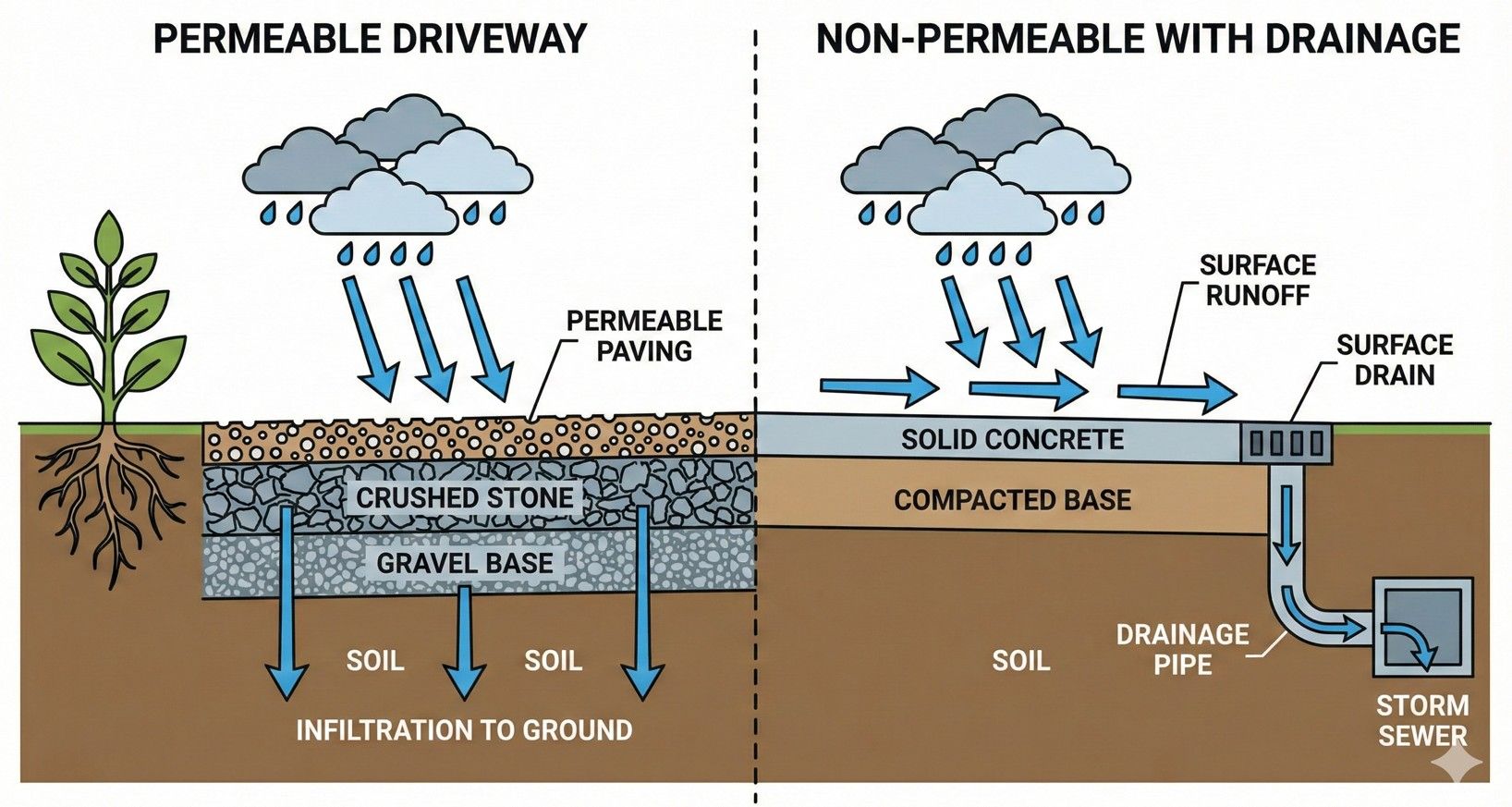
Permeable driveways allow rainwater to soak through the surface and into the ground below. This reduces strain on local drainage systems and eliminates the need for additional soakaways in most cases. Resin bound surfaces and certain block paving installations with permeable joints fall into this category.
Non-permeable surfaces (standard tarmac, concrete, sealed block paving) require proper water runoff solutions. This typically means installing channel drains, gullies, or soakaways to collect and redirect water away from the property.
Choosing the Right Driveway Material for Your Coventry Property
There's no single "best" driveway material - what works perfectly for a semi-detached house in Allesley might be completely wrong for a period property in Kenilworth. The right choice depends on several factors specific to your situation.
Key Factors to Consider
Budget & Long-Term Value
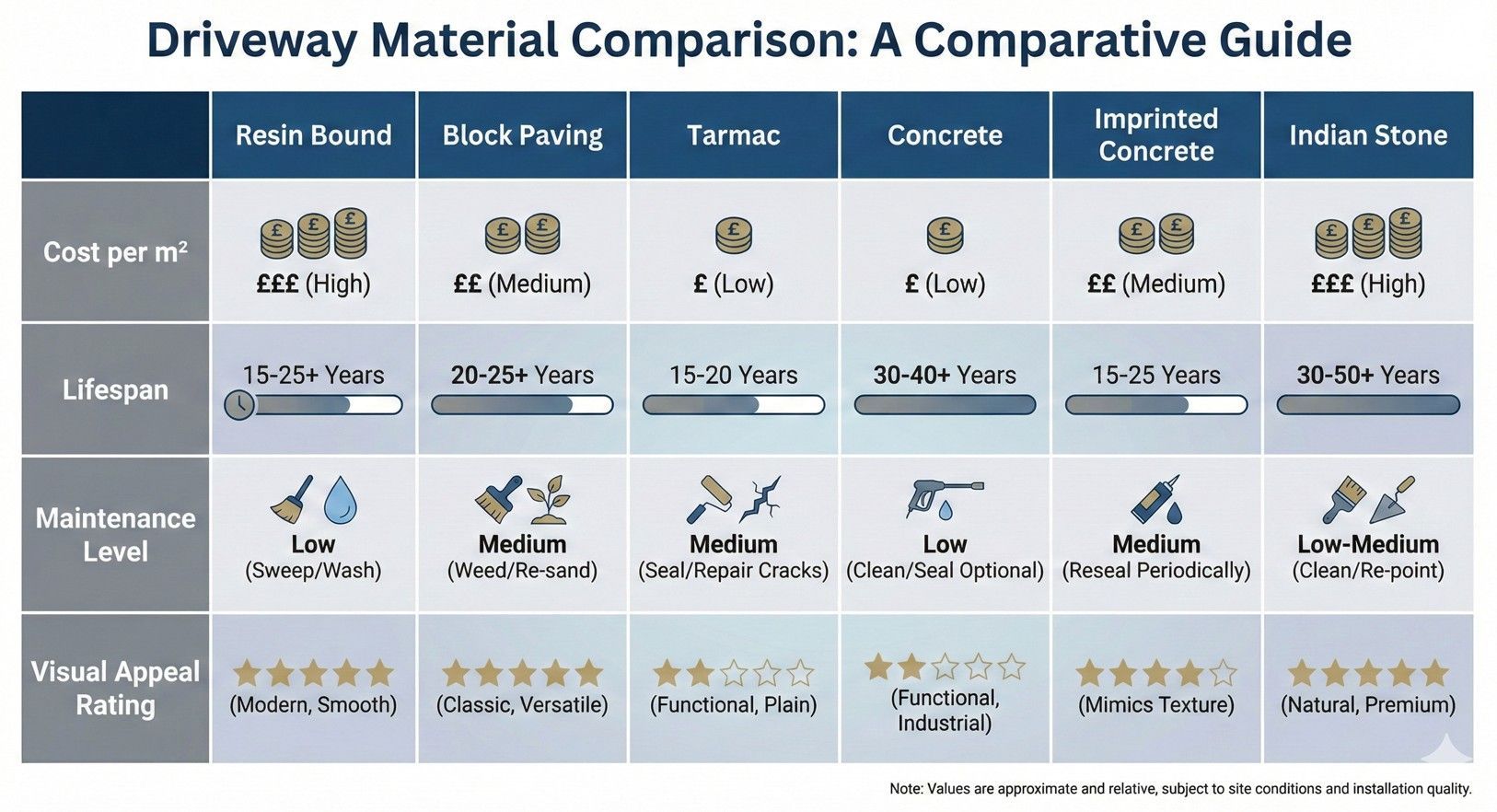
Your available budget naturally influences material choice, but it's worth looking beyond the initial installation cost. A cheaper tarmac driveway might need resurfacing in 10-12 years, whilst resin bound surfaces typically last 15-20 years with minimal maintenance. When you factor in cleaning, sealing, and potential repairs over time, the total cost picture changes.
We provide honest cost comparisons during consultations so you can make an informed decision based on both upfront and lifetime costs.
Vehicle Usage & Weight
How you actually use your driveway matters. If you're parking a family car and occasionally having visitors, most materials will be suitable. However, if you regularly park a caravan, motorhome, or commercial vehicle, or if you're loading and unloading heavy equipment, you'll need something more robust.
Concrete handles heavy loads better than any other material. Block paving works well if you choose commercial-grade blocks rather than standard residential ones. Resin bound surfaces are durable but can be affected by very heavy concentrated loads or sharp turning circles from large vehicles.
Property Style & Kerb Appeal
Your driveway should complement your property's character. Victorian and Edwardian homes in areas like Earlsdon often suit traditional materials - block paving, Indian stone, or imprinted concrete that mimics historical finishes. Modern properties in newer developments tend to suit contemporary options like resin bound or clean-lined block paving patterns.
That said, there are no fixed rules. We've installed ultra-modern resin driveways on period properties and traditional cobbled designs on new builds - it depends on your personal preference and the overall look you're trying to achieve.
Maintenance Requirements
Some homeowners want a driveway they can basically ignore, whilst others don't mind occasional upkeep. Your preference here should influence your material choice.
Low Maintenance Options:
- Resin bound driveways resist weed growth and require minimal cleaning
- Imprinted concrete needs occasional resealing but little else
- Properly sealed tarmac stays clean with periodic jet washing
Moderate Maintenance Options:
- Block paving benefits from annual weed treatment and re-sanding joints every few years
- Indian stone paving needs sealing to prevent staining
- Standard concrete requires crack monitoring and occasional patching
We'll explain the realistic maintenance requirements during your consultation, so there are no surprises later.
Not sure which driveway material suits your property?
Contact DNA Driveways Coventry for a free consultation. We'll visit your property, assess the site, and discuss all available options with honest advice about what works best for your budget and requirements.
Driveway Company Coventry
If you're looking for a professional driveway company in Coventry then please get in touch today
What to Expect During Your Driveway Installation
Understanding the installation process helps you plan around the work and know what's happening at each stage. Most driveway projects take between 3-7 days depending on size, material choice, and ground conditions.
Project Timeline & Stages
Day 1-2: Excavation & Preparation
We start by removing your existing surface and excavating to the required depth. This is the noisiest part of the process, with machinery breaking up old materials and removing them from site. We use lorries to take waste away for proper disposal - you won't be left with a pile of rubble to deal with.
During excavation, we check for any underground services (water pipes, electric cables, gas lines) and work around them carefully. If we find unexpected issues like poor soil conditions or drainage problems, we'll discuss solutions with you before proceeding.
Day 2-3: Base Installation
Once excavation is complete, we install the sub-base using Type 1 MOT aggregate. This gets laid in 100mm layers and compacted with a vibrating plate or roller between each layer. Proper compaction here is what prevents your driveway from sinking or developing dips later.
We install edge restraints (kerbs or edging blocks) at this stage to keep everything contained. If drainage solutions like soakaways or channel drains are needed, they go in now before the surface layer.
Day 4-5: Surface Installation
The surface installation method varies by material:
- Block paving gets laid by hand, with each block placed individually and checked for level
- Tarmac is delivered hot and needs laying and compacting within a short timeframe
- Resin bound requires dry conditions and gets trowelled smooth whilst workable
- Concrete is poured and levelled, then left to cure for several days
- Imprinted concrete has patterns stamped whilst still workable, then requires curing time
Day 6-7: Finishing & Cleanup
Final touches include pointing block paving, applying sealants where specified, and thorough site cleanup. We remove all equipment, sweep the area, and leave your property tidy.
Some materials need additional curing time before you can use them - fresh concrete or imprinted concrete needs 7-10 days, whilst tarmac can typically take light traffic after 24 hours.
Access & Disruption
You won't have vehicle access to your driveway during installation. Most customers arrange to park on the street or at a neighbour's for the duration of the work. We'll discuss this during planning so you can make arrangements.
We work between 8am and 5pm on weekdays, with Saturday mornings possible if needed to complete a project. We don't work Sundays.
Pedestrian access to your front door is maintained wherever possible, though there may be periods where you'll need to use a side or rear entrance. We'll let you know in advance when this is necessary.
Site Protection & Safety
We use barriers and warning signs to protect the work area whilst materials are curing. Children and pets should be kept away from the site during this time - fresh concrete, wet resin, and hot tarmac all pose safety risks.
If your driveway adjoins neighbouring properties, we take precautions to protect their boundaries and communicate with them if any noise or temporary access issues might affect them.
Resin Driveways Coventry
Resin driveways have become increasingly popular across Coventry over the past decade. The smooth, contemporary finish appeals to homeowners looking for a modern aesthetic, whilst the practical benefits make them suitable for busy family homes.
Resin Bound vs Resin Bonded
These terms get used interchangeably, but they're different systems with different results.
Resin Bound involves mixing aggregates with resin before application. The mixture gets trowelled onto a prepared base, creating a smooth, permeable surface. Water drains through the surface rather than pooling on top. This is the premium option and what we typically recommend for driveways.
Resin Bonded applies resin to the base first, then scatters loose aggregate on top. This creates a textured finish that isn't fully permeable. Loose stones can come free over time, and the surface isn't as smooth underfoot. We generally use this system for decorative areas rather than main driveways.
Benefits of Resin Bound Driveways
The main advantage is low maintenance. The bound surface resists weed growth naturally - there are no gaps for seeds to settle into. Moss and algae struggle to establish on resin surfaces compared to block paving or concrete.
Resin driveways meet SuDS (Sustainable Drainage Systems) regulations without additional drainage infrastructure in most cases. The permeable surface allows rainwater to drain naturally into the ground below, reducing strain on local drainage networks.
Colour and design options have expanded significantly as the market has grown. You can choose from natural stone aggregates in various colours, or opt for recycled glass aggregates for a more distinctive appearance.
Considerations for Resin Installations
Installation requires specific weather conditions - temperatures above 10°C and dry conditions for the entire curing period. This makes autumn and winter installations more challenging in Coventry's climate.
The upfront cost is higher than most alternatives, typically £300 per square metre installed. However, the longevity (15-20 years with minimal maintenance) and low ongoing costs offset this initial investment for many homeowners.
Sharp turning circles from large vehicles can cause some surface wear over time. If you regularly manoeuvre a large van or motorhome on your drive, we'd discuss whether resin is the most suitable choice during your consultation.
Driveway companies near me
If you're looking for driveways companies near me in Coventry then please get in touch today
Block Paving Driveways
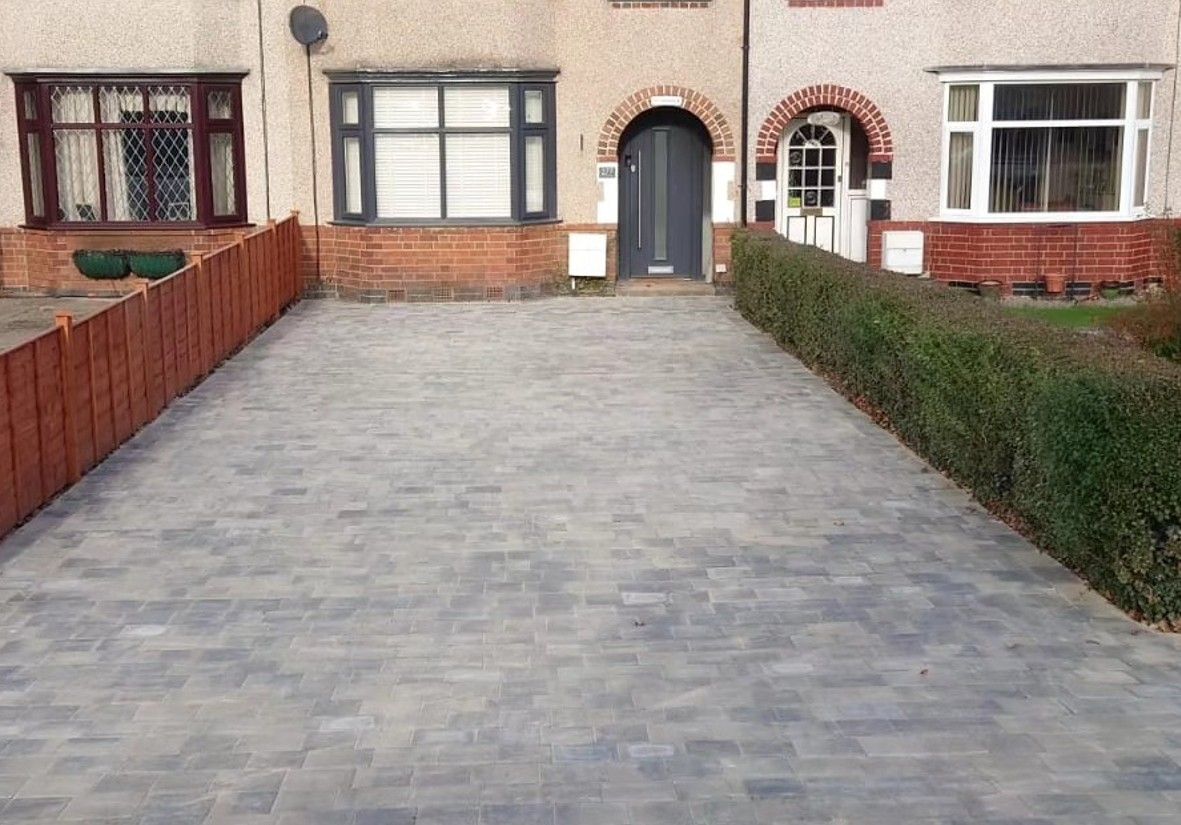
Block paving remains one of the most popular driveway choices across Coventry and surrounding areas. The combination of durability, design flexibility, and reasonable cost makes it suitable for a wide range of properties and budgets.
Design Options & Patterns
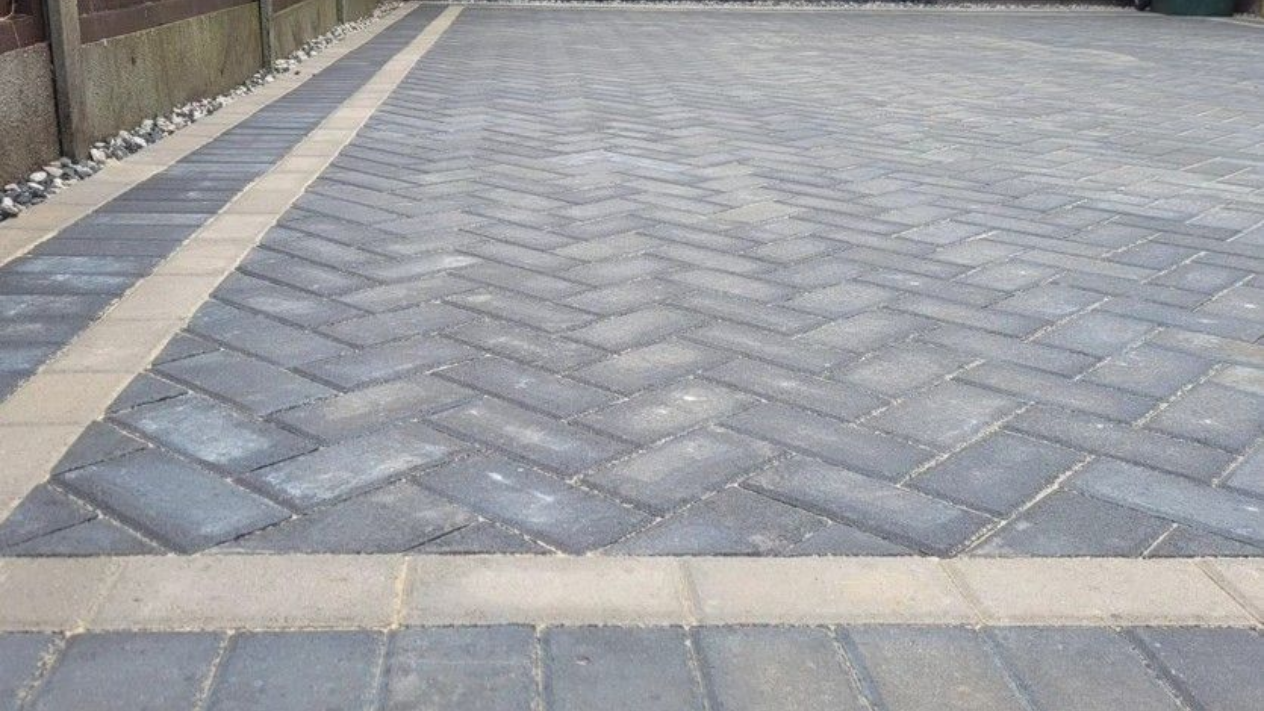
Block paving offers more design possibilities than any other driveway material. Standard rectangular blocks can be laid in various patterns:
- Herringbone - The strongest pattern for driveways, distributing weight effectively
- Stretcher bond - Running parallel lines, similar to brick walls
- Basketweave - Pairs of blocks creating a woven appearance
- Random pattern - Mixed sizes creating an irregular, natural look
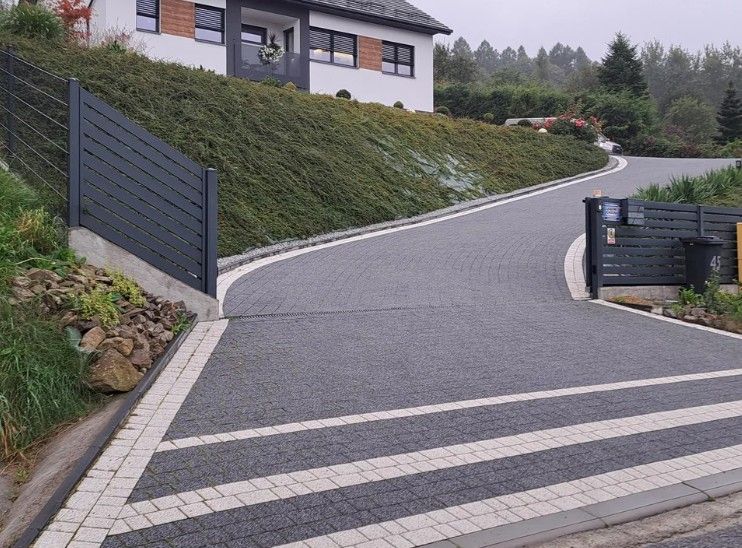
You can incorporate contrasting colours to create borders, circles, or even house numbers worked into the design. We've created everything from simple two-tone block paving driveways in Coventry to complex geometric patterns depending on what customers want.
Tarmac Driveways Coventry
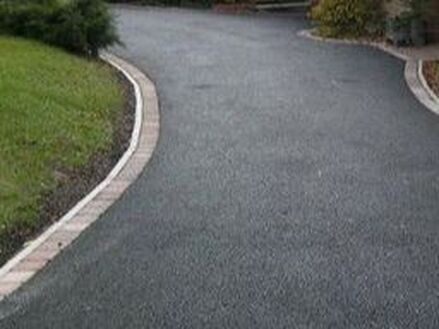
Tarmac (also called asphalt) has been a staple driveway material in the UK for decades. Many driveways installed in the 1960s and 70s are still in use today, which speaks to the material's durability when properly installed and maintained.
Modern Tarmac Installations
Today's tarmac driveways in Coventry use improved materials and laying techniques compared to older installations. Modern binder courses and wearing courses provide better resistance to weathering, cracking, and surface degradation.
A typical tarmac installation involves a base layer (binder course) of approximately 50mm, followed by a finer wearing course of 25-30mm. This two-layer approach creates a durable surface that handles regular vehicle traffic without issue.
The main advantages are speed of installation and cost. Tarmac can be laid and ready for use faster than most alternatives, and at £180 per square metre, it's one of the most affordable options available.
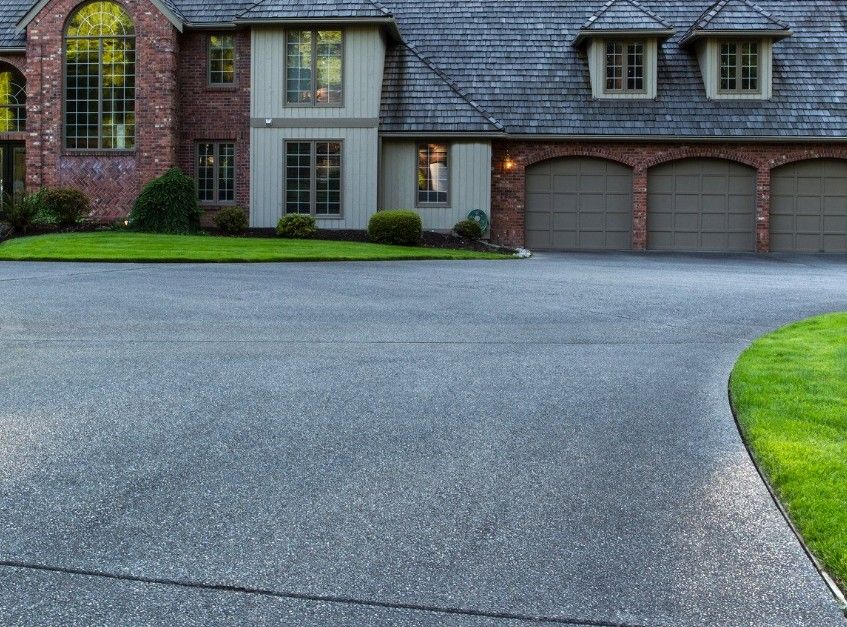
Tarmac Resurfacing
One of tarmac's biggest benefits is that existing tarmac driveways can often be resurfaced rather than completely replaced. If your current tarmac base is sound but the surface has deteriorated, we can apply a new wearing course over the top.
Resurfacing costs significantly less than full replacement - typically £100 per square metre - and takes just 1-2 days for most domestic driveways. The new surface bonds to the existing base, restoring appearance and functionality without the cost and disruption of excavation.
We assess whether resurfacing is viable during the survey. If the existing base has failed or if there are significant drainage issues, full replacement is the better long-term solution.
Maintaining Tarmac Surfaces
Tarmac requires some ongoing maintenance to maximise its lifespan. The surface naturally weathers over time as small aggregate stones gradually loosen. This process accelerates if the surface isn't sealed periodically.
We recommend applying a tarmac sealant every 3-5 years. This protects against UV degradation, prevents water penetration, and restores the dark black appearance that fades as tarmac ages.
Oil and fuel spills can damage tarmac surfaces, breaking down the bitumen binder. If you park a vehicle that drips oil, placing a drip tray underneath or choosing a more resistant material like concrete might be sensible.
Chemical damage and heavy impacts can dislodge surface stones, creating small holes that expand if left unrepaired. Catching and filling these early prevents larger repairs later.
Concrete Driveways Coventry
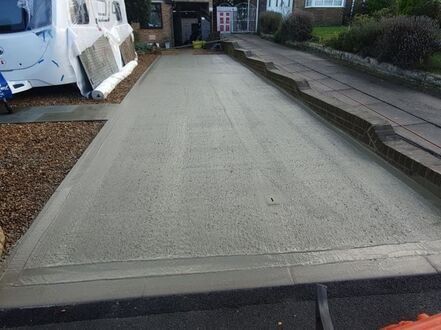
Concrete driveways suit properties where heavy use and durability outweigh aesthetic considerations. If you need a functional, long-lasting surface that can handle significant weight and frequent activity, concrete delivers.
When Concrete Makes Sense
We recommend concrete for specific situations:
- Regular parking or manoeuvring of heavy vehicles (motorhomes, commercial vans, lorries)
- Driveways used for loading and unloading heavy equipment
- Commercial properties with frequent deliveries
- Situations where budget constraints rule out other materials but durability is paramount
Concrete handles concentrated loads better than any alternative. You can park a fully loaded delivery truck on a properly installed concrete driveway without concern.
Concrete Installation Process
Concrete driveways require careful planning around expansion joints. These joints allow the concrete to expand and contract with temperature changes without cracking. We typically install expansion joints every 3-4 metres in both directions.
The concrete needs 7-10 days to cure before taking vehicle weight. During this time, the surface must be protected from rain, frost, and disturbance. We cover fresh concrete if weather conditions require it.
A brushed or lightly textured finish provides better grip than smooth concrete, particularly in wet conditions. We can also add colour to the concrete mix if you want something other than standard grey.
Concrete Maintenance & Longevity
Properly installed concrete driveways can last 25-30 years with minimal maintenance. The main upkeep involves cleaning and applying a concrete sealant every few years to protect against water penetration and surface staining.
Cracks can develop over time, particularly if expansion joints weren't positioned correctly or if ground movement occurs. Small cracks can be filled relatively easily, but larger structural cracks might require more extensive repairs.
Oil and chemical stains are more visible on concrete than on darker surfaces like tarmac. Sealing helps prevent absorption, but concrete will show wear and staining more obviously than some alternatives.
Imprinted Concrete Driveways Coventry
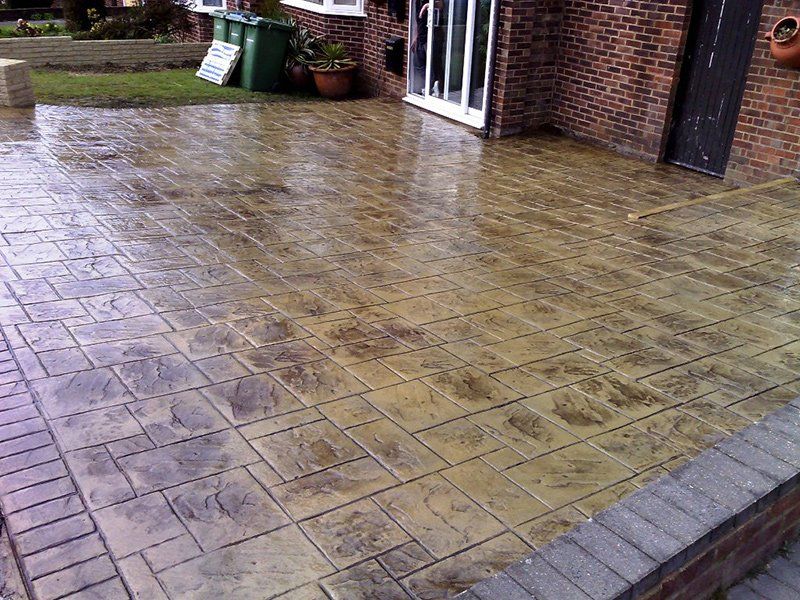
Imprinted concrete (also called pattern imprinted concrete or stamped concrete) combines concrete's durability with decorative finish options. This makes it particularly suitable for homeowners who want low maintenance but don't like standard concrete's plain appearance.
How Imprinted Concrete Works
The process involves pouring concrete as normal, then stamping patterns into the surface whilst it's still workable. Colour hardeners and release agents create the desired appearance - anything from cobblestones to slate to brick effects.
The result looks similar to block paving or natural stone but without the joints where weeds can grow. This gives you the aesthetic appeal of traditional materials with significantly less ongoing maintenance
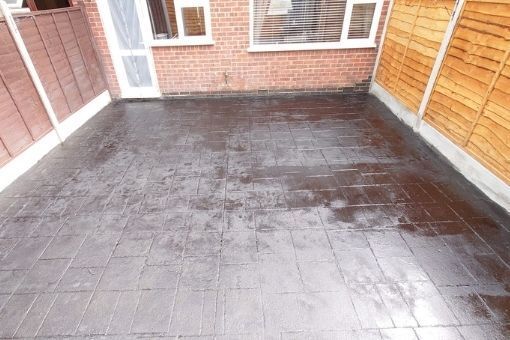
Pattern & Colour Options
Available patterns range from traditional cobble effects that suit period properties to contemporary geometric designs for modern homes. Popular options include:
- Ashlar slate - Large rectangular slabs with natural stone texture
- European fan - Semi-circular cobble pattern
- Random stone - Irregular natural stone appearance
- Herringbone brick - Classic brick paving pattern
Colours can be mixed to create borders, bands, or multi-tone effects. The colour gets sealed into the surface and doesn't fade like painted finishes might.
Maintenance Requirements
Imprinted concrete needs resealing every 3-5 years to maintain protection and appearance. The sealant wears away gradually through foot and vehicle traffic, UV exposure, and weathering.
Resealing is straightforward - the surface gets cleaned thoroughly, then a new coat of sealant applied. This restores the colour depth and protective layer.
Between sealing, maintenance is minimal. An occasional jet wash keeps the surface clean, but there's no weeding, no re-sanding joints, and no individual elements to replace if damaged.
Indian Stone Paving Driveways Coventry
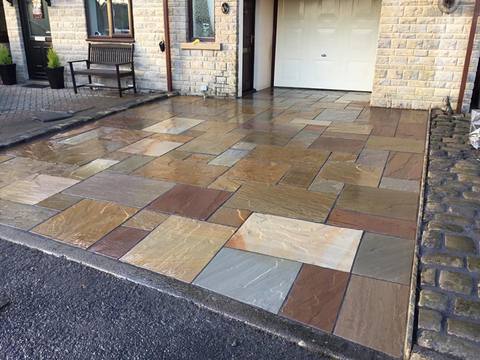
Indian stone paving has grown considerably in popularity for driveways over the past 15 years. The natural stone appearance provides character that manufactured materials can't quite replicate, whilst modern calibrated stones make installation more straightforward than traditional paving.
Stone Types & Grades
Indian stone comes in different thicknesses, and this matters significantly for driveway applications. Patio-grade slabs typically measure 20-22mm thick, whilst driveway-grade stones are 30-40mm thick.
Using patio-grade stone on a driveway might seem like a cost-saving measure, but the thinner slabs are more prone to cracking under vehicle weight. Even with a solid base, we only use driveway-grade stone for vehicle areas - it's not worth the risk of premature failure.
Common stone types include:
- Kandla Grey - Consistent grey tones, popular for contemporary properties
- Raj Green - Mixed greens, browns, and greys with natural variation
- Autumn Brown - Warm browns and rust tones
- Black Limestone - Dark, dramatic appearance when wet
- Mint Sandstone - Pale greens and creams
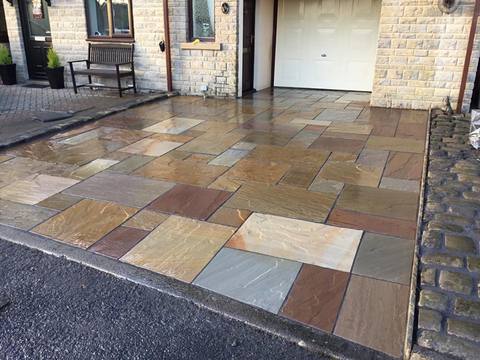
Driveways
If you're looking at getting any sort of new driveways installed in Coventry then please get in touch today
Installation Considerations
Indian stone paving requires more labour than block paving because natural stone has thickness variations even in calibrated ranges. Each slab needs individual attention to achieve consistent levels across the surface.
The irregular sizes and natural riven texture create an organic appearance, but this means more cutting and fitting than uniform manufactured products. Installation takes longer than block paving, which factors into the overall cost.
Joint width varies depending on whether you want a formal or informal appearance. Tighter joints (10-15mm) create a more contemporary look, whilst wider joints (15-25mm) emphasise the individual stone character.
Sealing & Maintenance
Natural stone absorbs liquids more readily than manufactured materials. Oil drips, tyre marks, and organic matter (like fallen leaves) can stain unsealed stone surfaces.
We recommend sealing Indian stone driveways with a penetrating sealer that protects without creating a high-gloss finish. This maintains the natural appearance whilst providing stain resistance.
Sealed stone requires occasional cleaning with appropriate stone cleaners - harsh chemicals or pressure washers set too high can damage the surface or strip the sealant. We provide maintenance guidance specific to your stone type when we complete installation.
Cobbled Driveways Coventry
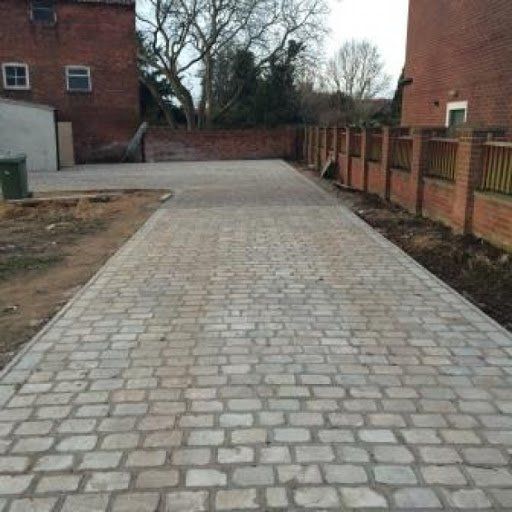
Traditional cobbled driveways suit period properties and conservation areas where maintaining historical character matters. Modern cobbled installations can also work on contemporary properties if you want something distinctive.
Cobble Types & Sources
Cobbles come in various materials and sizes:
Natural Stone Cobbles - Granite, sandstone, or limestone shaped through natural weathering or cutting. These provide authentic traditional appearance but come at premium cost.
Reclaimed Cobbles - Salvaged from old streets or yards, these offer genuine period character with natural weathering and patina. Availability varies, and sufficient quantities for driveway projects aren't always obtainable.
Reproduction Cobbles - Manufactured to mimic traditional cobbles, these provide consistent sizing and more reliable supply. The appearance lacks the natural variation of genuine stone but costs considerably less.
Setts - Larger than traditional cobbles (typically 100x100mm), these create a similar aesthetic but with a flatter, more regular surface that's easier to drive on.
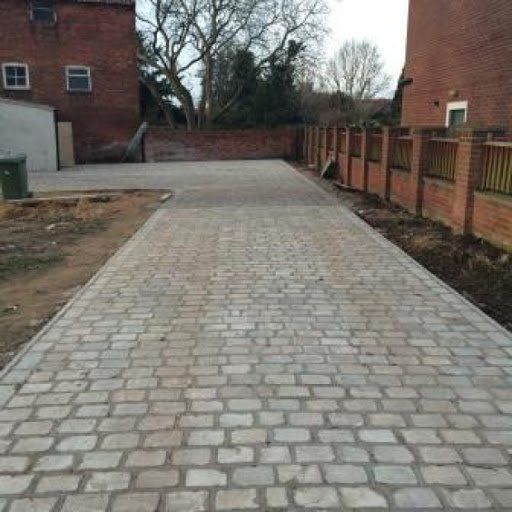
Installation Method
Cobbles can be laid on a sand bed (traditional method) or bedded in mortar (more stable for driveways). For driveway applications, we typically use the mortar method to prevent movement under vehicle weight.
The irregular surface means cobbled driveways aren't as smooth to drive on as modern alternatives. This is part of their character, but worth considering if you have a low-profile sports car or mobility concerns.
Maintenance & Practicalities
Cobbled surfaces require minimal maintenance once properly installed. The gaps between cobbles can accumulate dirt and allow weed growth, so periodic cleaning and weed treatment maintains appearance.
The uneven surface means snow clearing takes more effort than on smooth driveways, and leaf fall can settle in the gaps. These aren't deal-breakers, but they're practical considerations if you're comparing cobbles to smoother alternatives.
Patios Coventry
Many homeowners extend their driveway material through to the rear garden for consistency in appearance and maintenance. We install patios using the same groundwork principles that ensure driveway longevity.
Patio Design & Layout
Patios serve different purposes than driveways - entertaining areas, dining spaces, garden features - so the design process focuses on how you'll actually use the space.
We can create:
- Single-level patios for straightforward garden layouts
- Multi-level patios with steps where gardens slope
- Raised patios with retaining walls
- Sunken seating areas
- Circular or curved features
- Integrated planters or borders
The same materials suitable for driveways work for patios, though you have the option of using patio-grade stone or thinner pavers in areas that won't take vehicle weight.
Patio Installation Process
The installation follows similar principles to driveways - proper excavation, compacted sub-base, edge restraints, and the chosen surface material. However, patios typically need less robust bases than driveways since they don't bear vehicle weight.
Drainage remains just as significant. A patio that puddles after rain isn't pleasant to use, so we grade the surface to shed water away from the property and surrounding areas.
If your patio adjoins the house, we ensure the finished level sits at least 150mm below the damp proof course to prevent water bridging into the property walls.
Combined Driveway & Patio Projects
Installing driveway and patio together offers practical advantages. Material ordering becomes more efficient, groundwork equipment is already on site, and the installation team can work continuously rather than making separate visits.
Using matching or complementary materials creates visual continuity from front to back of the property. This works particularly well with block paving, Indian stone, or resin surfaces where consistent appearance ties the outdoor spaces together.
Driveway Cleaning & Sealing Coventry
We offer cleaning and sealing services for all driveway types, whether we installed them originally or not. Regular maintenance extends the life of your driveway and keeps it looking presentable.
Block paving, imprinted concrete, and natural stone surfaces benefit most from periodic sealing. The sealant protects against stains, reduces weed growth, and makes routine cleaning easier.
Professional cleaning removes ingrained dirt, oil stains, and organic growth that regular hosing won't shift. We use appropriate equipment and cleaning agents for each surface type to avoid damage whilst achieving thorough results.
If you're interested in maintenance services for your existing driveway, contact us for a quote.
Planning Permission & Regulations for Coventry Driveways
Most driveway installations don't require planning permission, but there are regulations around drainage that affect what you can install.
Permeable Surface Requirements
Since 2008, regulations require that new or replacement driveways larger than 5 square metres either use permeable materials or direct water to a drainage system rather than the public highway.
This means you have three options:
- Install a permeable surface - Resin bound, permeable block paving with appropriate sub-base, or grass-crete systems allow water to drain naturally through the surface
- Add drainage infrastructure - Channel drains, gullies, or soakaways collect water from non-permeable surfaces and direct it appropriately
- Drain to a lawn or border - If your driveway slopes towards a garden area that can absorb the runoff, this satisfies the regulations
We assess drainage requirements during the survey and design your driveway to comply with regulations without needing separate planning applications.
Dropped Kerbs
If your driveway crosses a pavement to reach the road, you'll need a dropped kerb. Installing one without permission from the local council is illegal and can result in fines.
We can advise on the dropped kerb application process, though the application itself needs to come from you as the property owner. Coventry City Council typically takes 6-8 weeks to process applications and charges around £1,200-£1,500 for a standard residential dropped kerb.
The driveway installation can proceed whilst the dropped kerb application is being processed, but you cannot legally drive across an undropped kerb even if your new driveway is complete.
Conservation Areas
If your property sits within a conservation area, additional restrictions might apply to front garden and driveway alterations. These vary by specific conservation area, so we recommend checking with Coventry City Council's planning department before proceeding.
Listed buildings have stricter controls, and planning permission is usually required for any external alterations including driveways.
Our Guarantee & Aftercare
We guarantee our workmanship for 10 years on all new driveway installations. This covers defects resulting from installation errors, base failure, or structural issues that develop under normal use.
What's Covered
The guarantee covers:
- Base subsidence or settlement
- Drainage system failures
- Edge restraint movement or failure
- Surface defects resulting from installation problems
- Structural cracks in concrete surfaces
What's Not Covered
Normal wear and tear isn't covered - surface weathering, colour fading, and gradual deterioration that naturally occurs over time fall outside the guarantee.
Damage from misuse (such as inappropriate chemical spills, excessive point loading, or vehicle impacts) isn't covered. Neither is damage from ground movement unrelated to our installation, such as subsidence affecting the wider property.
Lack of maintenance voids the guarantee for issues that preventative maintenance would have avoided. For example, if block paving fails because joints were never re-sanded despite our recommendations, that wouldn't be covered.
Aftercare Advice
We provide specific maintenance guidance when we complete your installation. This covers appropriate cleaning methods, recommended sealing schedules, and what to watch for as your driveway settles into use.
Most driveways experience minor settlement in the first few months as materials compact under use. This is normal and doesn't indicate problems. If you notice anything concerning during this period, contact us and we'll assess whether any adjustment is needed.
Looking for a New Driveway in Coventry?
Frequently Asked Questions About Driveways in Coventry
“Our driveway was in desperate need of a major change as grass and weeds kept coming through the gravel and it was becoming a battle we never seemed to be able to win especially over the summer months. Following our consultation with DNA Driveways Coventry we plumped for a resin driveway. The only regret now is that we didn't decide to upgrade sooner. Our driveway is now the envy of the street rather than the embarrassment!
Sheila R
“Our existing tarmac driveway was looking dishevelled and was causing us more and more effort to keep moss and weeds away and we always seemed to be sweeping up more and more stones but were on a tight budget. following our consultation we decided to resurface our tarmac drive - the difference is amazing and at a very affordable price."
Jim G
“We are quite house proud and have a Victorian style property but don't have the inclination to spend weekends weeding or spraying moss and weed killer in the summer to keep the drive looking smart. A patterned imprinted driveway seemed the most obvious choice for us and I've definitely have no regrets. The drive up to the house is quite stunning."
Bill S
Ready to Transform Your Driveway?
We offer free consultations and no-obligation quotes for all driveway projects across Coventry and surrounding areas. Whether you know exactly what you want or need guidance on the best option for your property, we're here to help.
Call us on 0247 542 6111 to discuss your project, or use our quote request form above to send us your measurements and photos for an initial assessment.
We typically respond to enquiries within 24 hours on weekdays.
Areas Covered by DNA Driveways Coventry:
Driveways Binley Woods, Driveways Baginton, Driveways Balsall Common, Driveways Ryton-on-Dunsmore, Driveways Kenilworth, Driveways Allesley, Driveways Keresley End, Driveways Bedworth, Driveways Leamington, Driveways Warwick, Driveways Rugby
To finish off your the entrance to your property why not include a new set of composite driveway gates Coventry fully supplied and fitted by Composite Gates UK.